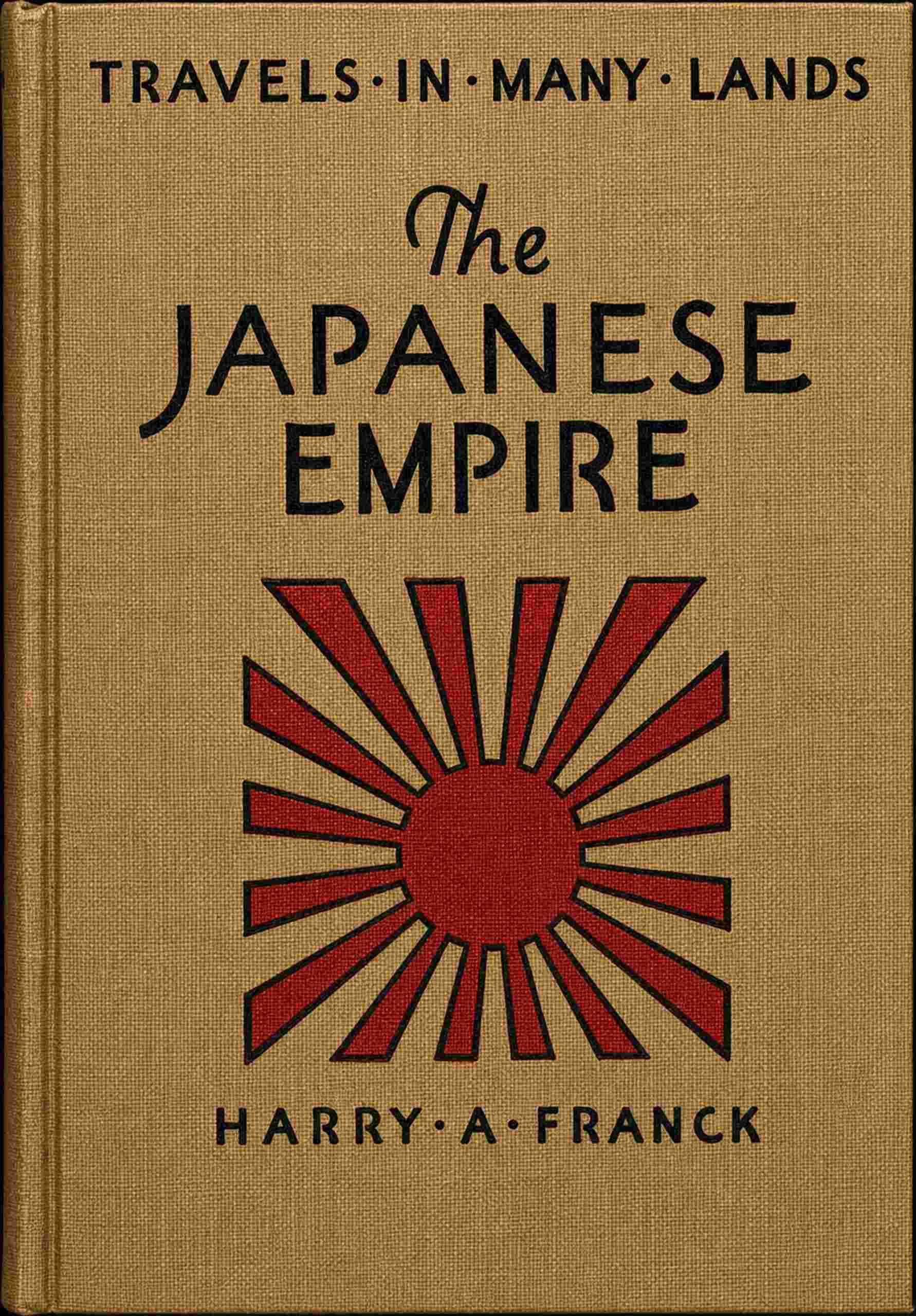
The book presents a detailed travel narrative through the territories of the Japanese Empire, covering the author's journeys in the 1920s from urban centers to remote islands and continental possessions. The account begins with the voyage across the Pacific Ocean, the arrival in Yokohama shortly after the devastating 1923 earthquake, and the transition to the capital of Tokyo with its low wooden houses, paper walls, and bustling street life.
Throughout the narrative, the author examines social customs, education, transportation via rickshaw and modern rail, and popular entertainments such as traditional theater, motion pictures, and geisha performances. Detailed descriptions capture the daily routines of common citizens, including crowded domestic life in paper-walled homes, the strict discipline of Japanese schools, and unique cultural spectacles like sumo wrestling matches and Shinto pilgrimage festivals.
Moving beyond the main island of Honshu, the journey extends into the northern reaches of Hokkaido. There, the narrative contrasts modern agricultural developments with the traditional lifestyle of the indigenous Ainu people, detailing their distinct appearance, customs, and interactions with Japanese settlers.
The later sections of the book cover the expansion of the empire into its tropical and continental dependencies. In Formosa, the author explores the mountainous interior, observing camphor-gathering operations and the tense relations between the administration and the head-hunting mountain tribes. Finally, the account shifts to the Korean peninsula, referred to as Chosen, analyzing the impact of Japanese governance, traditional white attire, unique horsehair hats, and the distinctive architecture of Korean homes.
The volume concludes by examining the leased territory of the Liaotung Peninsula in Manchuria, highlighting modernized ports like Dairen, industrial sites such as the Fushun coal mines, and the extensive South Manchuria Railway. Through concrete detail and firsthand observation, the text paints a comprehensive picture of an expanding East Asian empire.