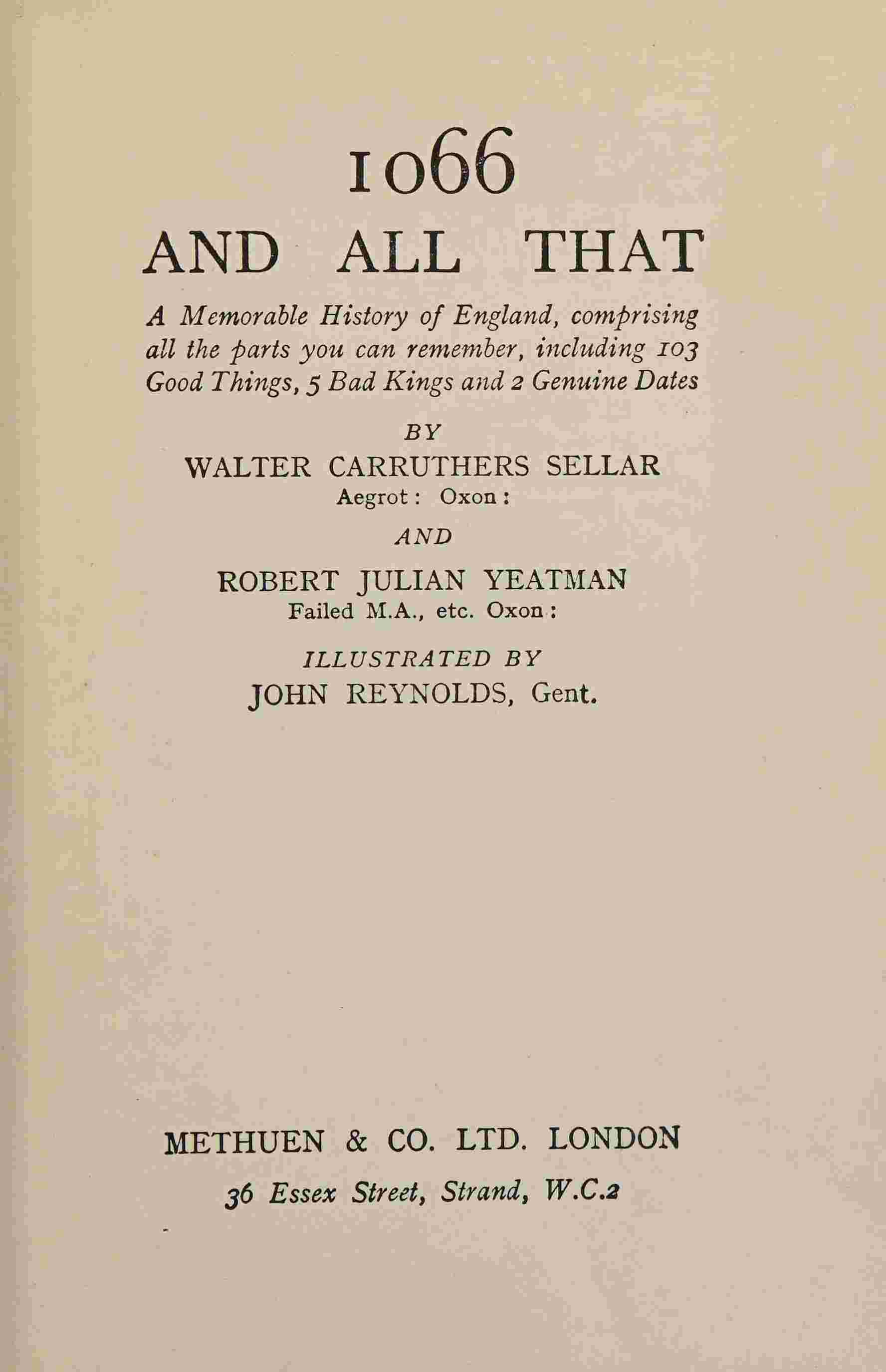

The book presents a delightfully distorted chronicle of the British nation from the Roman invasion by Julius Caesar through the twentieth century, operating on the premise that history consists solely of what people manage to retain in their memories. Along the way, historical epochs are neatly sorted into categories of good things and bad things, rendering complex political movements into absurdly simple equations.
Key figures emerge in entirely new lights, such as Alfred the Cake, the unfortunate Ethelred the Unready who was perpetually taken unawares by his own death, and a continuous succession of monarchs who meet their ends through various surfeits of food or political confusion. The narrative navigates the Middle Ages as a grand age of piety characterized by torture, faggots, and the building of romantic castles by wicked barons.
The turbulence of the English Civil War is reduced to the eternal struggle between Cavaliers who were wrong but romantic and Roundheads who were right but repulsive, culminating in Charles I walking and talking half an hour after his head was cut off. Victorian imperialism and the numerous justifiable wars of the nineteenth century receive the same irreverent treatment, complete with elaborate test papers designed to baffle any serious scholar.
Throughout the succession of dynasties from Normans and Tudors to Stuarts and Hanoverians, the central national ambition remains steadfast: ensuring that Britain stays top nation. The history finally screeches to a halt in the twentieth century with the conclusion of the Great War, leaving America as the top nation and history officially at an end.