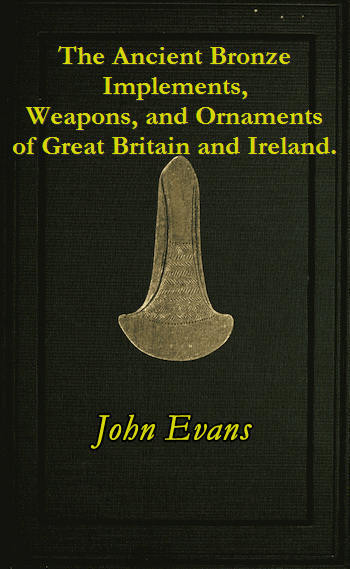



This volume by John Evans presents a thorough examination of bronze implements, weapons, and ornaments across Great Britain and Ireland, establishing a solid comparative foundation for prehistoric archaeology. The author addresses the complex problem of chronological transitions, arguing that while the succession of stone, bronze, and iron ages is a reliable framework for Western Europe, the actual transition between these stages was gradual and varied by region. Through careful typological analysis, Evans traces the evolution of cutting tools from simple, unornamented flat celts modelled after Neolithic stone axes to complex flanged celts, winged palstaves, and advanced socketed types. The text covers a vast array of artifacts including chisels, gouges, sickles, knives, daggers, leaf-shaped swords, spear-heads, shields, trumpets, and personal ornaments such as torques and bracelets.
Special attention is devoted to methods of manufacturing, the composition of bronze alloys, the use of stone and bronze moulds, and the various ways these implements were hafted. By comparing British types with continental forms, Evans attempts to illuminate the sources of British bronze civilization while addressing contemporary scholarly debates regarding foreign influence and chronology. The work concludes by emphasizing the importance of accumulating comprehensive empirical facts to understand prehistoric cultures.