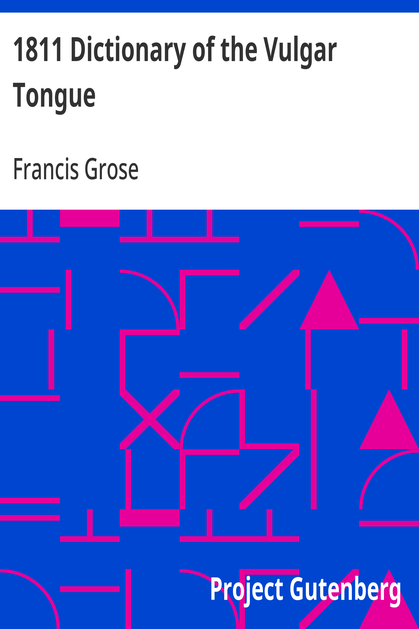


Captain Francis Grose originally compiled his famous dictionary to document the language of the lower orders of society, but subsequent editions expanded drastically to encompass the specialized slang of fashionable young men, university students, thieves, and vagrants. The text records a vast array of colloquialisms, cant terms, and idiomatic expressions used by distinct subcultures across Britain. Readers encounter specialized taxonomies for criminal enterprises, drinking habits, bodily functions, and common trades, reflecting the gritty realities of urban life in the Georgian era. The dictionary arranges hundreds of entries alphabetically, providing etymological speculations and contemporary anecdotes for each term.
While the definitions often maintain a cynical or humorous tone, they systematically preserve the actual vernacular spoken in taverns, prisons, and streets. The work exposes the hidden linguistic codes of pickpockets, highwaymen, and beggars, detailing the mechanisms of their swindles and the structures of their clandestine fraternities. Ultimately, the lexicon documents a linguistic ecosystem entirely separate from polite society, offering a comprehensive snapshot of underground communication before the onset of the Victorian age.