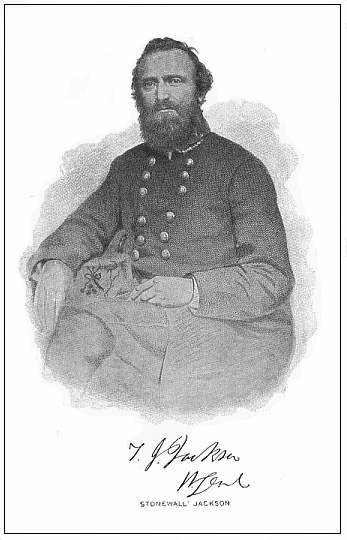




The work opens with an introduction by Field-Marshal Viscount Wolseley, praising the tactical and strategical grasp of the author and framing the Civil War within the broader context of Anglo-Saxon military history. The narrative then shifts to Jackson's early years, depicting his birth in Clarksburg, his hardscrabble upbringing in the Virginia backwoods, and his appointment to West Point. Despite an unpromising start and significant educational deficiencies, his indomitable will and rigorous self-discipline carried him through the academy.
From West Point, Jackson's career advances rapidly into the Mexican War, where he secures the brevet rank of major through sheer gallantry at Vera Cruz, Contreras, and Chapultepec. These campaigns provided a harsh practical apprenticeship, exposing the limitations of volunteer soldiers and the critical importance of discipline. Following the Mexican conflict, Jackson retreats into academic life at the Virginia Military Institute in Lexington, spending a decade in quiet study, religious devotion, and the mastery of military history.
The narrative addresses the deep political and social rift leading up to the Secession War, explaining the conflict between Federalism and States' Rights, and examining the complex reality of slavery in the South. Jackson's personal convictions are revealed as deeply intertwined with his sense of duty to his native State, leading him to offer his sword to Virginia when the war finally breaks out in eighteen sixty-one.
The final sections detail Jackson's command at Harper’s Ferry and the skirmish at Falling Waters. The narrative culminates in the historic forced march of the Army of the Shenandoah to Manassas Junction, setting the stage for the pivotal first battle of the conflict. Throughout, the focus remains firmly fixed on the mechanics of strategy, the necessity of professional standards in the military, and the unyielding character of a great commander.