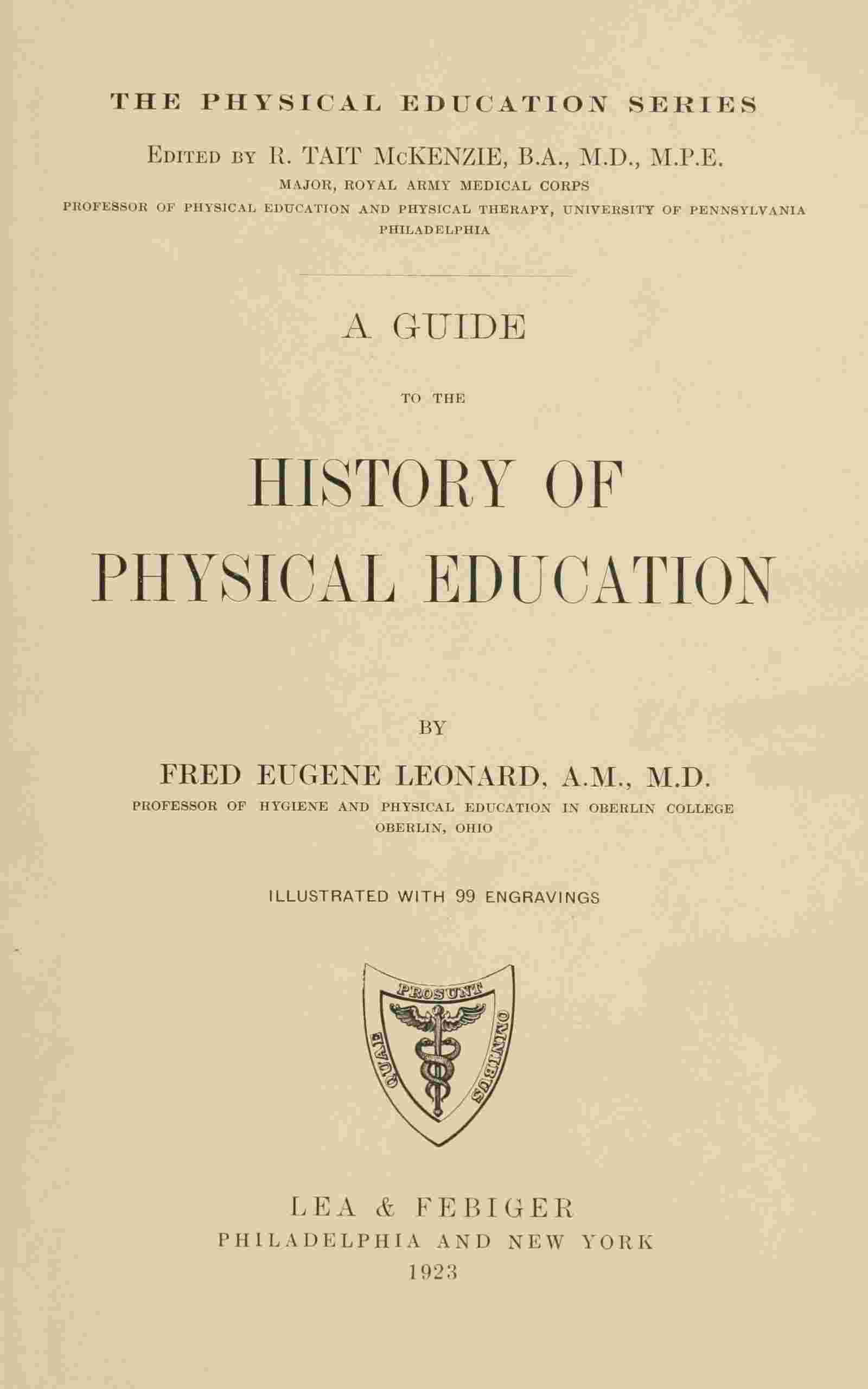



The book presents an extensive historical survey of physical education, examining how different civilizations understood the relationship between the body and the mind. Beginning with the ancient Greek ideal of harmonious development at the palæstra and the stadium, the narrative contrasts this with the Roman focus on utilitarian military discipline and the austere asceticism of the early Christian church. The study follows the transformation of bodily training through the chivalric traditions of the Middle Ages, the classical revival of the Renaissance, and the influential philosophical writings of John Locke and Jean Jacques Rousseau.
A central focus of the work is the emergence of modern physical education in Germany, detailing the contributions of Basedow at the Dessau Philanthropinum and GutsMuths at Schnepfenthal. The narrative traces the popular gymnastics movement spearheaded by Friedrich Ludwig Jahn and the Hasenheide Turnplatz, examining its patriotic motivations and its turbulent interaction with state politics. The author then explores the systematization of school gymnastics by Adolf Spiess, who integrated physical training into the regular curriculum for both boys and girls, establishing the foundation for modern pedagogical methods.
The final sections detail the complicated history of physical education in Prussian schools, highlighting the bureaucratic resistance, the influence of the Swedish system introduced by Rothstein, and the eventual re-establishment of Jahn's parallel bars. The text concludes with the rise of the modern playground movement, led by figures like Konrad Koch, August Hermann, Emil Hartwich, and Emil von Schenckendorff, who successfully championed outdoor games, school excursions, and teacher training courses to make physical culture an essential part of national life.