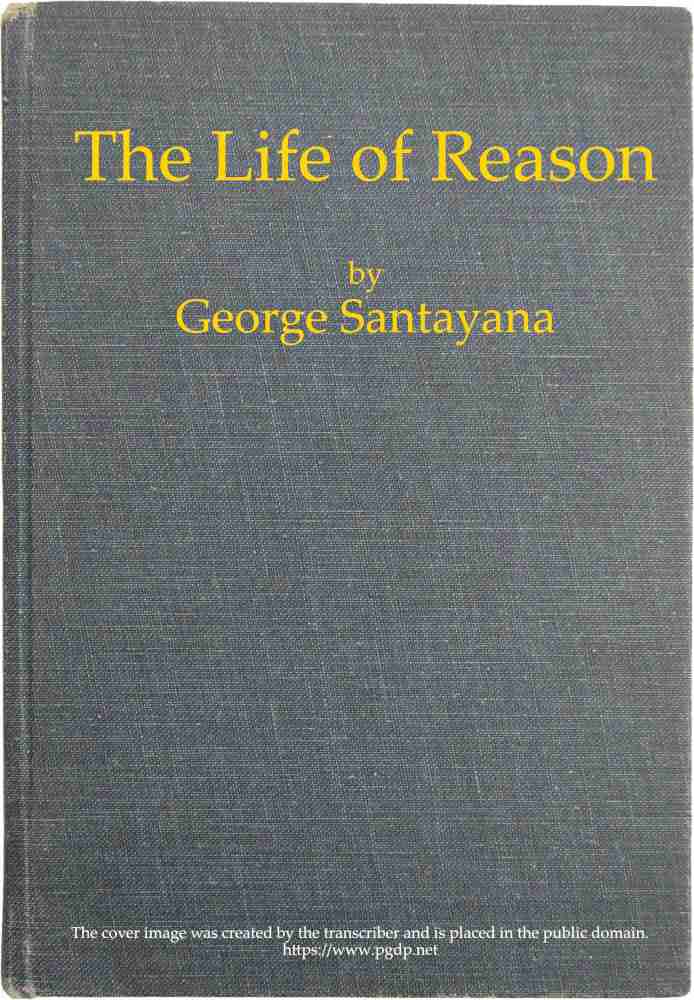

George Santayana's masterwork investigates the evolution of human consciousness and progress through the harmonious union of instinct and ideation. The author posits that reason is not a transcendental force imposed from without, but a natural development that emerges when biological impulses are guided and clarified by reflection. Throughout the text, Santayana traces how human beings transition from a chaotic, dreamlike immediacy to a structured understanding of the world, distinguishing between the fluid immediacy of immediate sensation and the stable, reliable concepts constructed by the intellect.
The inquiry begins with an analysis of common sense and the birth of reason, demonstrating how primal dualities and instincts form the nucleus of all subsequent philosophical thought. Santayana examines how perception requires cumulative synthesis, allowing the mind to project permanent external objects behind the flux of fleeting sensations. He subjects the epistemological claims of modern philosophy—particularly the skeptical and subjective turns taken by thinkers like Hume and Kant—to rigorous critique, defending the pragmatic necessity and validity of believing in an independent natural world.
Further exploration delves into the mechanics of social interaction and the discovery of fellow-minds, showing how the pathetic fallacy and animal contagion ground our initial intuitions of other conscious beings. Santayana contrasts concretions in discourse, which yield universal ideas and logical essences, with concretions in existence, which constitute physical things and historical facts. He argues that both modes of thought are indispensable yet fundamentally distinct, warning against the error of reducing physical realities to mere mental phenomena or elevating logical abstractions into absolute metaphysical substances.
The volume addresses the moral tone and relative value of ideas, evaluating the classic heritage of Greek philosophy against modern industrial and democratic currents. Santayana maintains that while ancient thinkers like Plato and Aristotle achieved remarkable clarity in defining the ideal goals of thought, their systems often suffered from an over-reliance on myth or a false physics. The true Life of Reason avoids both raw empiricism and ungrounded mysticism, seeking instead a balanced mastery of experience where intelligence serves as both the method of practice and its ultimate reward.
Ultimately, the work portrays the Life of Reason as humanity's highest art—an ongoing endeavor to bring order, beauty, and happiness to a natural existence that is otherwise indifferent to human desires. By uniting a trustworthy conception of physical conditions with an adequate understanding of human ideals, Santayana provides a comprehensive blueprint for rational living that remains profoundly relevant to anyone seeking to navigate the complexities of human progress without falling into despair or dogmatism.