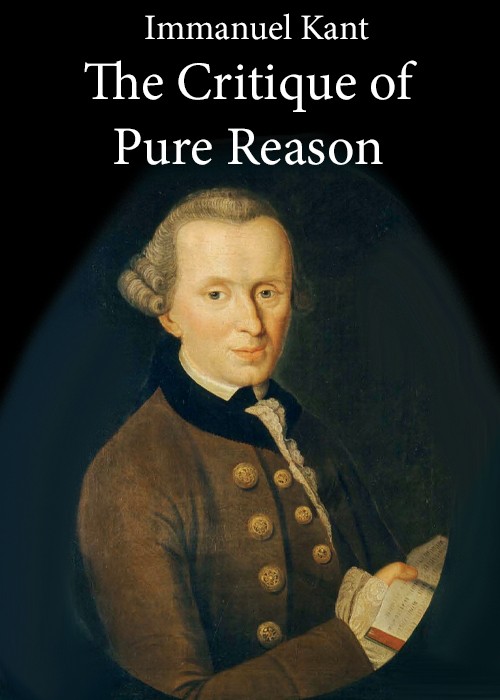




Immanuel Kant examines the fundamental architecture of human reason and the precise conditions that make objective knowledge possible. He begins by addressing the central problem of how synthetic judgments a priori can exist in mathematics and natural science, arguing that experience alone cannot account for the necessary and universal truths found within these disciplines. Kant introduces the revolutionary hypothesis that objects must conform to our cognitive faculties rather than our cognition passively conforming to objects, much like Copernicus reversing the celestial perspective. He separates sensibility from understanding, demonstrating through the transcendental aesthetic that space and time are not objective properties of things in themselves, but rather the pure subjective forms of human intuition.
Consequently, human knowledge is strictly bounded to the realm of possible experience and phenomena. In the transcendental analytic, Kant unfolds the pure concepts of the understanding, or categories, which serve as the necessary rules for synthesizing the manifold of intuition into coherent experience. He proves that these categories have no legitimate use or objective validity beyond the boundaries of possible perception, thereby dismantling the traditional claims of dogmatic metaphysics regarding supersensible entities like the soul, freedom, and God. By denying speculative knowledge of the transcendental realm, Kant famously makes room for moral faith, securing a rigorous boundary between empirical science and practical reason. The work concludes by mapping out the systematic application of these principles, providing a permanent foundation for a truly scientific philosophy.