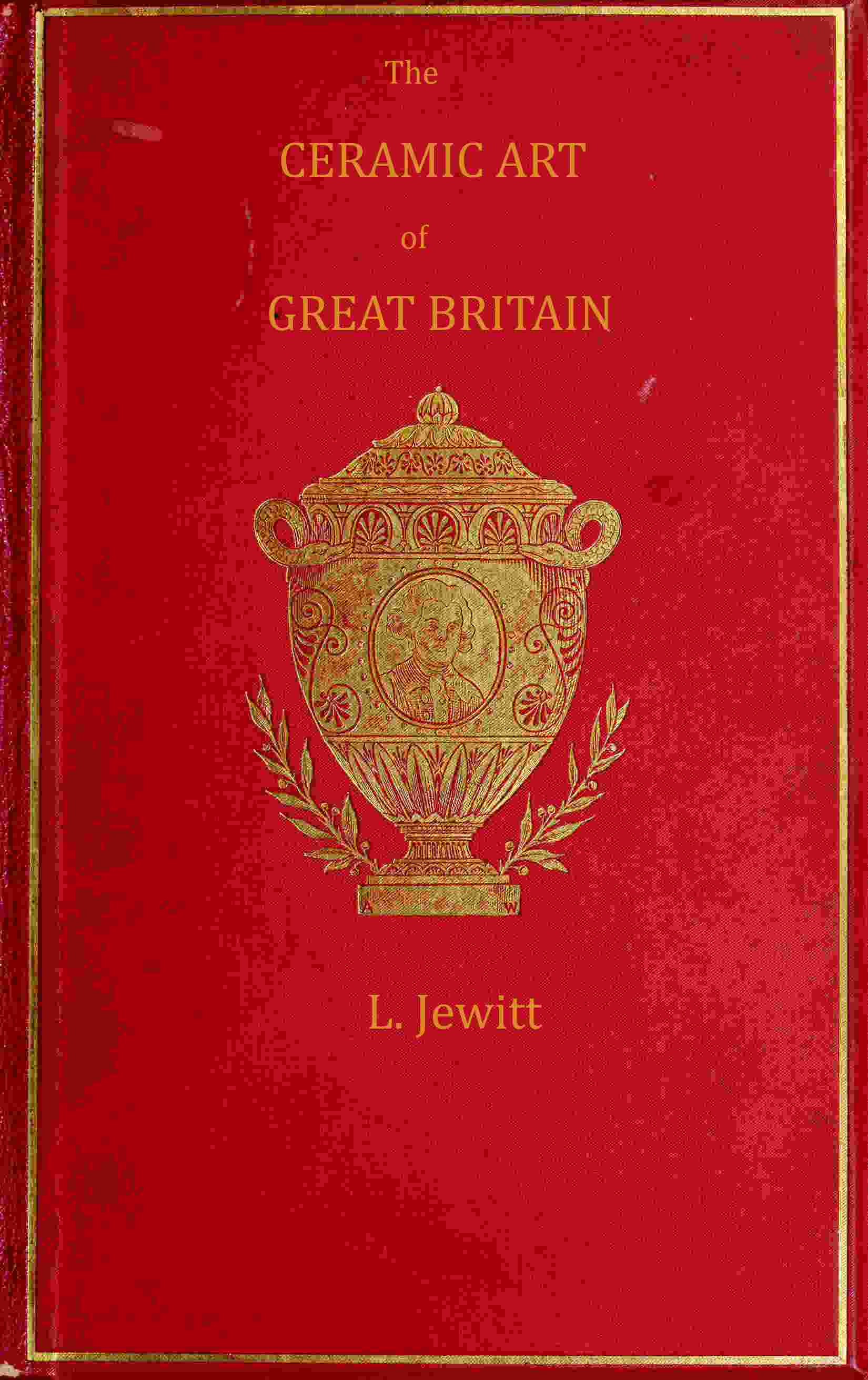





The work opens with an exhaustive examination of pre-historic and Celtic fictile remains, drawing on excavations from ancient burial mounds to classify sepulchral urns, food vessels, drinking cups, and immolation urns. These early pieces, formed by hand without a wheel and imperfectly fired on funeral pyres, establish the unbroken lineage of the ceramic art in Britain. The narrative then progresses to the Romano-British period, detailing the major pottery centres such as the Upchurch marshes, the Durobrivian potteries on the river Nen, and the Salopian kilns. The text examines the distinct characteristics of these wares, including the blue and slate-coloured vessels produced in smother kilns, the Castor ware adorned with hunting scenes and gladiatorial combats in relief, and the extensive manufacturing sites discovered in the New Forest, Oxfordshire, and Wilderspool.
Transitioning through the Anglo-Saxon and Norman periods, the author uses illuminated manuscripts and actual archaeological finds, such as the Norman potworks at Burley Hill, to illustrate the continuity and evolution of domestic vessels, pitchers, and cinerary urns. The account moves forward into the sixteenth and seventeenth centuries, detailing the introduction of bellarmines, salt-glazed stoneware, and the butter-pots of Staffordshire, alongside the patents and experiments of pioneers like John Dwight at Fulham and the brothers Elers at Bradwell. The later chapters survey the vast expansion of the ceramic industry throughout the eighteenth century, covering the rise of Delft ware, the introduction of flint grinding, the establishment of porcelain works at Bow, Chelsea, Worcester, Derby, and Plymouth, and the monumental contributions of Josiah Wedgwood. The work concludes with a detailed survey of nineteenth-century advancements, patent histories, and the growth of commercial manufacturing centres across the kingdom.