
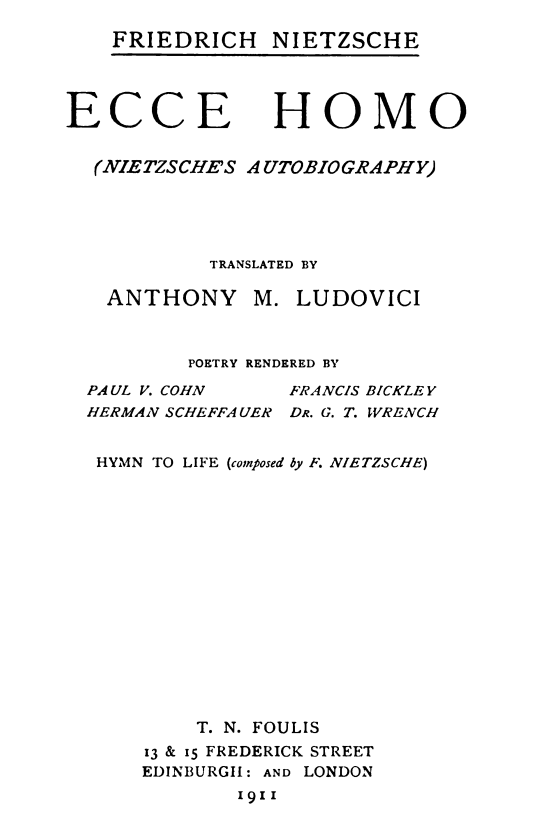

Friedrich Nietzsche delivers a relentless critique of Christianity, presenting it not as a system of divine truth, but as a mechanism of decadence rooted in resentment. He argues that Christian morality—built on concepts of sin, pity, and the promise of an afterlife—systematically undermines human vitality, health, and the natural will to power. By elevating the weak, the sick, and the herd animal, Christianity wages war against the noble and the strong, reversing the natural order where excellence is prized.
The text traces the historical roots of this inversion back to Judaism, where priests established a system of moral rules that made mankind dependent on spiritual intermediaries. Nietzsche contends that the original teachings of Jesus were distorted after his death by followers like Paul, who weaponized the cross to build a structure of psychological tyranny and guilt. The promise of personal immortality and the doctrine of equal souls serve as ultimate flattery for the mediocre, effectively domesticating humanity and destroying true culture.
Throughout the work, Nietzsche contrasts this life-denying religion with alternative frameworks, such as Buddhism and the ancient laws of Manu, which he views as more intellectually honest or aligned with natural stratification. He laments how Christianity crushed the flourishing civilizations of antiquity and the Renaissance, steering European history away from greatness.
The argument culminates in a total condemnation of the Christian church as an institutional parasite that lives on human misery and intellectual dishonesty. Nietzsche calls for a transvaluation of all values, urging a return to instincts that celebrate earthly existence, strength, and intellectual integrity over spiritual illusion.