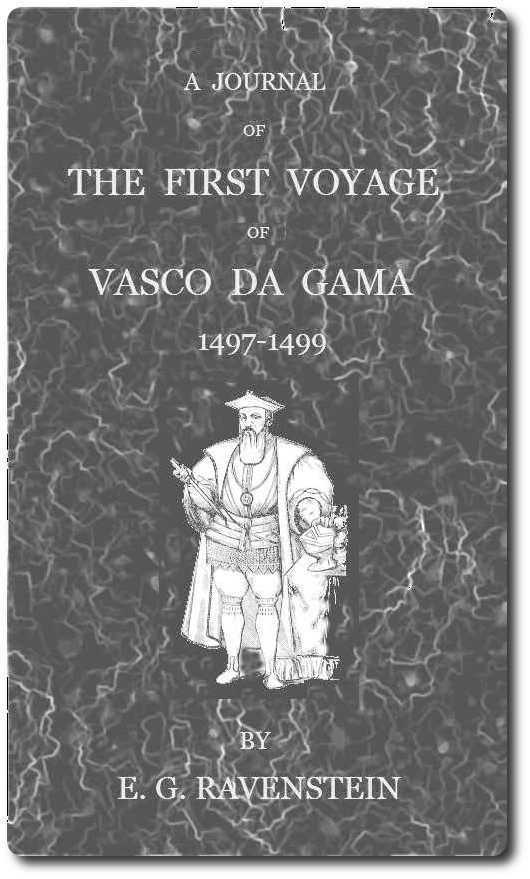





The text documents the groundbreaking expedition commissioned by King Manuel of Portugal to discover an ocean route to India and capture the lucrative spice trade. Four vessels under the command of Vasco da Gama departed Lisbon in July fourteen ninety-seven, navigating down the western coast of Africa before executing a daring, prolonged open-ocean crossing across the southern Atlantic directly toward the Cape of Good Hope.
After rounding the African continent, the fleet sailed northward along the eastern coast, stopping at ports such as Mozambique, Mombasa, and Malindi. At these locations, the Portuguese navigated hostile local politics, faced active treachery from Muslim rulers and merchants, and secured an experienced pilot capable of guiding them across the Arabian Sea.
In May fourteen ninety-eight, the fleet finally reached Calecut on the Malabar coast of India. The initial reception by the local ruler, the Zamorin, soon deteriorated due to the interference of resident Arab merchants who perceived the Portuguese as a threat to their commercial monopoly. Negotiations collapsed, leading to detained envoys, mutual distrust, and strategic skirmishes.
Despite hostility, the expedition achieved its primary objective: gathering concrete intelligence on the geography of the Indian Ocean, establishing the viability of direct maritime trade, and procuring samples of valuable spices including cinnamon, pepper, and cloves, alongside precious stones.
The homeward voyage across the Arabian Sea tested the endurance of the remaining crew to the absolute limit. Severe outbreaks of scurvy decimated the personnel, reducing the number of able-bodied sailors so drastically that the crew was forced to burn one of their own ships, the São Raphael, due to a lack of manpower.
The surviving vessels successfully rounded the Cape of Good Hope, battled contrary winds, and ultimately returned to Portugal in fourteen ninety-nine. This voyage permanently altered global trade routes, broke the Venetian and Egyptian monopoly on eastern spices, and inaugurated an era of European maritime dominance.