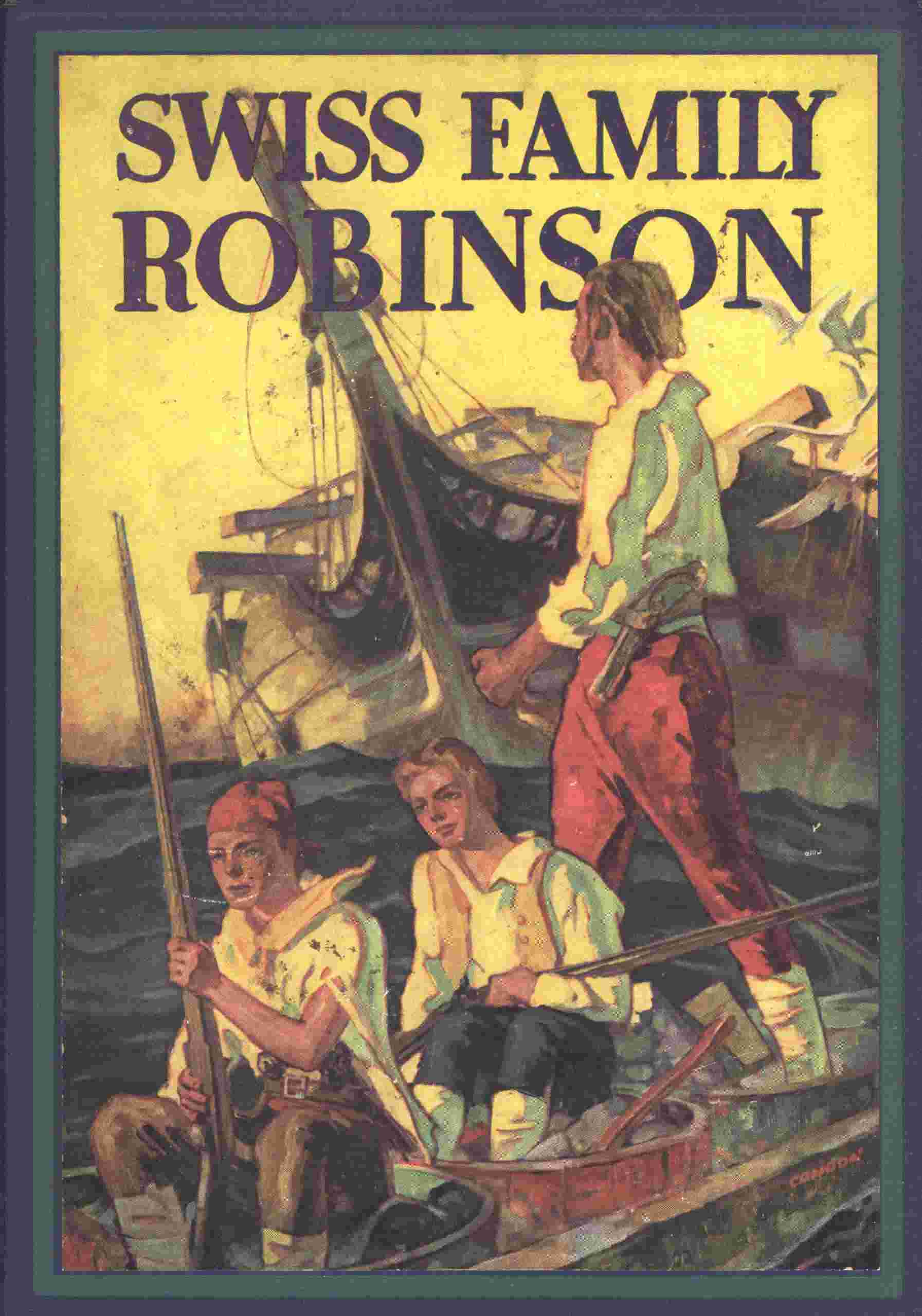





The narrative begins during a six-day tempest that leaves a Swiss clergyman, his brave wife, and their four sons alone upon a shattered vessel after the crew abandons ship. Using barrels, planks, and boundless ingenuity, the father and his eldest son construct a tub-raft to convey the family and essential stores to an unknown, rugged shore. They establish a temporary camp at Tent House, where they secure firearms, gunpowder, utensils, and livestock from the wreck before it finally breaks apart.
Driven by the intense heat and a desire for better safety and resources, the family explores the surrounding territory across a river bridged by their own labor. They discover a majestic group of giant fig-trees and decide to build their permanent home high among its branches. A rope ladder gives access to this aërial dwelling, named Falcon's Nest, which shields them from jackals and other perils of the wilderness. Daily life becomes an exercise in applied mechanics, botany, and zoology as the boys—Fritz, Ernest, Jack, and Francis—learn to gather tinder, spin thread from agaves, harvest sugarcane, bake cassava bread, and tan hides.
Expeditions into the interior yield remarkable discoveries, including the resourceful salvage of a hidden pinnace from the wreck, the taming of wild animals like an onagra and a young buffalo, and the harvesting of wild honey from the giant tree itself. Each family member contributes according to their temperament, turning theoretical knowledge into practical survival skills. The narrative underscores the triumph of human reason, moral fortitude, and domestic harmony over isolation and adversity in an uncharted paradise.