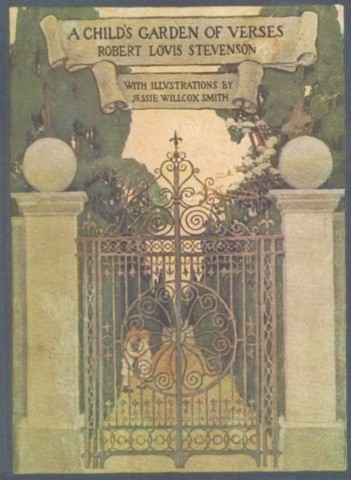



Robert Louis Stevenson's collection of children's poetry explores the inner world of a young mind, where the boundaries between physical reality and pure imagination dissolve completely. The author writes about the ordinary constraints of childhood—early bedtimes, illness, compulsory manners, and the steady authority of adults—and contrasts them with the boundless territories created through play. The poems detail how a staircase transforms into the deck of a ship, how pillows become mountain ranges for leaden soldiers, and how a patch of grass holds the bustling life of an entire universe.
Throughout the collection, the speaker moves between the safety of the domestic sphere and the vast horizons of the outside world. The changing seasons dictate the rhythm of daily life, shifting from the long, sunlit hours of summer garden exploration to frosty winter mornings lit by yellow candle-light. The poems examine the tension between the child's perspective, which magnifies every sensory experience, and the adult world that looms large and incomprehensible. Simple occurrences like the passing of the lamplighter or the sound of Auntie's rustling skirts become significant events charged with mystery and wonder.
A central theme is the solitude of the child and the compensatory power of the imagination. When left alone to play, the child populates the silent rooms and green lawns with unseen companions, pirate crews, and marching armies. The verses capture the specific melancholy of evening time, when play must cease and the child is called back from the land of stories to the reality of the nursery and the onset of sleep. The collection balances a sharp, affectionate observation of actual childhood behavior with a deep nostalgia for the intense, singular vision that vanishes once a person grows into adulthood.
The later sections of the book expand the perspective outward, addressing cousins, former nurses, and distant friends, reflecting on the permanence of memory and the irrevocable passage of time. The verses sent across the seas to childhood companions in places like India or California establish a dialogue between the present adult reality and the phantom voices of the past. Ultimately, the work preserves the fleeting architecture of early years, noting how physical places change and old houses pass to strangers, while the imaginative landscape remains fixed in memory as a universal country belonging to all who were once children.