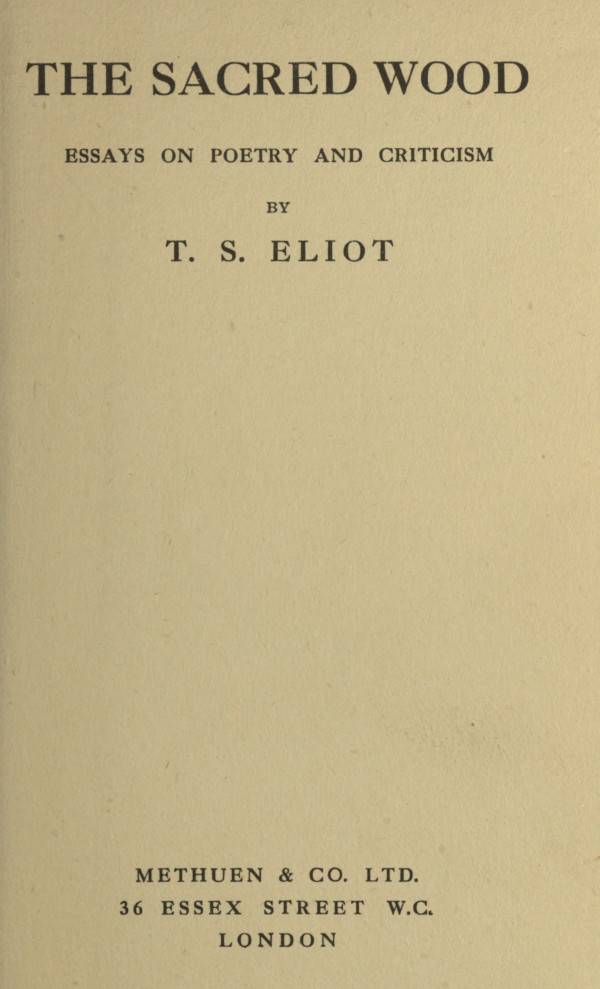


Thomas Stearns Eliot addresses the state of literary criticism and poetry in the early twentieth century, diagnosing a pervasive decline in intellectual rigor and critical standards. He critiques impressionistic critics like Arthur Symons and aristocratic romantics like George Wyndham for substituting personal emotion and ideological enthusiasm for disciplined analysis and genuine understanding. Instead, Eliot advocates for the recovery of a critical intelligence that operates with the precision of a scientific instrument, observing the object as it really is without the interference of autobiographical sentiment.
The central argument hinges on the concept of tradition and the impersonality of art. Eliot asserts that no artist has complete meaning alone, and true creativity requires an active historical sense encompassing the simultaneity of European literature from Homer onward. The progress of an artist involves a continuous self-sacrifice and extinction of personality, wherein the mature poet acts merely as a refined medium—a catalyst—transforming ordinary emotions into art without leaving personal traces. True poetry emerges not from a search for bizarre new human emotions, but from the intense pressure of the artistic process acting upon familiar materials within an established structural framework.
Expanding these principles to the poetic drama, Eliot examines why modern attempts to write verse plays fail. He contends that contemporary dramatists are burdened with the impossible task of inventing both a form and a philosophy, lacking the supportive current of ideas and the commonplaces of a shared culture that sustained Elizabethan and Greek dramatists. The failure of modern poetic drama and the inadequacy of contemporary translations of classical plays reveal a deeper alienation from traditional forms of expression. Through detailed studies of figures such as Ben Jonson, Philip Massinger, and William Blake, Eliot demonstrates how technical mastery must be grounded in an austere intellectual honesty rather than superficial rhetoric.
The essays culminate in an exploration of Dante as the supreme example of a poet who successfully integrated a comprehensive philosophical and theological structure into pure artistic vision. Eliot concludes that criticism must abandon the mere expression of personal tastes and instead devote itself to elucidation and comparison, utilizing the past to illuminate the immediate problems of contemporary art. By stripping away sentimental filler and ideological prejudice, the critic and the artist alike must approach literature with the austerity of a disinterested inquiry.