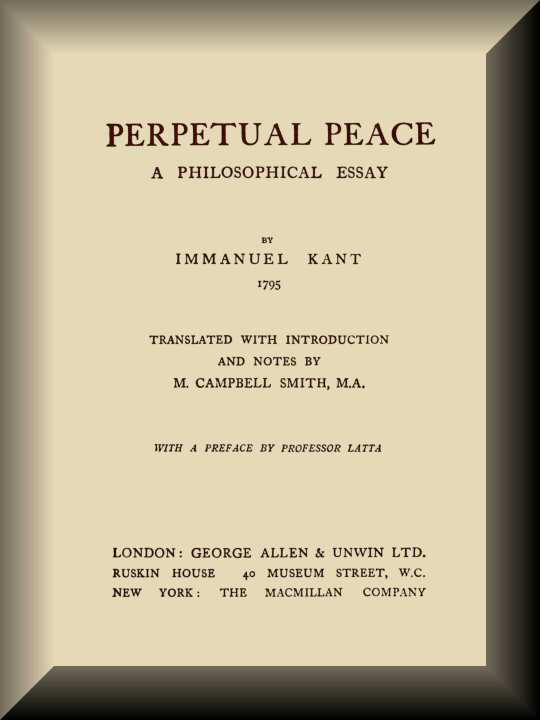



Immanuel Kant presents a rigorous philosophical inquiry into the structural conditions required to eliminate war and establish a permanent state of international peace. He begins by outlining six preliminary articles designed to remove the immediate threats of future conflict, such as abolishing standing armies, forbidding national debts incurred for foreign affairs, and prohibiting violent interference in the constitution of other states. The core of his argument rests on three definitive articles which dictate the legal framework for a peaceful world order. First, the civil constitution of every state must be republican, ensuring that the citizens who bear the costs of war must consent to it, unlike absolute monarchs who wage war with impunity.
Second, international law must be founded upon a federation of free states rather than a single universal monarchy, avoiding both the tyranny of a world empire and the lawlessness of the state of nature. Third, cosmopolitan right must be limited to conditions of universal hospitality, allowing peaceful visitors to interact without facing hostile conquest. Kant addresses the inevitable friction between political expediency and moral duty, arguing that true politics must bow to the principles of practical reason and public right. He demonstrates that nature itself uses human selfishness and discord as a mechanical means to compel nations toward a lawful union. Ultimately, Kant posits that striving for perpetual peace is not a utopian fantasy, but an ethical imperative and the logical destination of human history.