

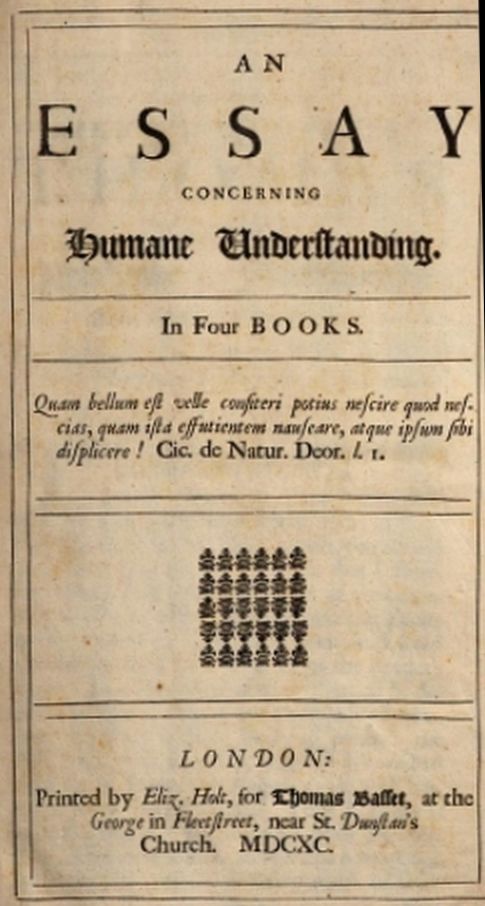

John Stuart Mill's comprehensive treatise begins by examining the primary instrument of thought: language. He argues that general names and their connotation form the bedrock of propositions, rather than abstract ideas or mere classifications. The work establishes that propositions are not verbal conventions or mental manipulations, but assertions concerning external realities—namely existence, co-existence, sequence, causation, or resemblance. After laying this groundwork, Mill turns to the core mechanism of acquiring knowledge: induction.
Rejecting the notion that scientific discovery is impossible, he details the experimental methods of inquiry, such as agreement and difference, demonstrating how we arrive at causal laws by observing uniformities in nature. The argument extends to the elimination of chance and the calculus of probabilities, showing how derivative laws are extended to adjacent cases through analogy and the deductive method. Having analyzed physical science, Mill applies the same logical canons to mental and moral phenomena, arguing against the absolute necessity of human actions and outlining a scientific approach to sociology and history. The final section dissects common fallacies, exposing the logical traps of ambiguity and a priori reasoning. Ultimately, the work champions the utility of formal logic as the arbiter of all scientific investigation, providing the methodological tools necessary to separate truth from error.