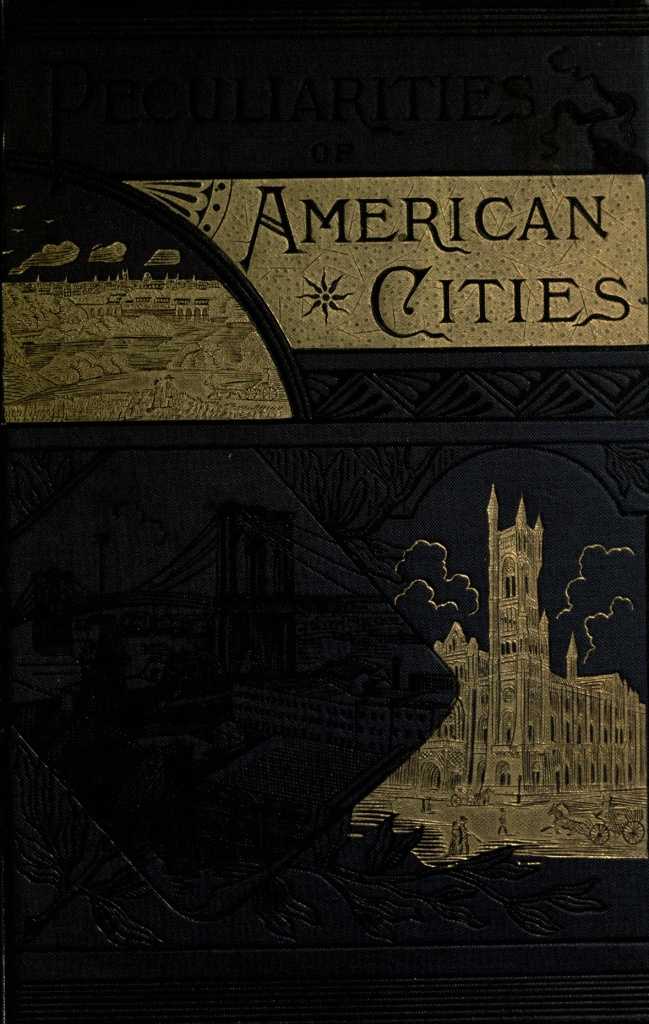




The book presents a comprehensive architectural, social, and geographical survey of the leading American and Canadian cities as observed by Willard W. Glazier during his extensive travels in the latter half of the nineteenth century. Eschewing dry, monumental statistics, the author prefers to walk the streets and talk of cities as he found them, recording daily life, local peculiarities, favorite resorts, and distinguishing characteristics.
The narrative opens in the East with Albany and Boston, tracing the historical associations, ancient landmarks, and striking geographic features of these pioneer settlements. Moving westward and southward, Glazier examines the unique attributes of Buffalo, Brooklyn, Baltimore, Charleston, and Cincinnati, detailing their commerce, early histories, and the physical ravages inflicted by the Civil War upon cities like Richmond and Charleston.
The journey continues across the vast expanse of the continent, touching upon the bustling business life and architectural splendor of Cleveland, Chicago, Cheyenne, Detroit, and St. Louis. The author vividly describes the rapid rise of western metropolises, the devastating fires that shaped their histories, and the diverse character of their populations, from the German settlements of Milwaukee to the Mormon community of Salt Lake City.
Further chapters explore the distinctive features of southern hubs like Savannah, the military history and imposing fortifications of Quebec and Montreal, and the bustling maritime trade of San Francisco and Portland. Throughout the work, the author intersperses tales of early pioneers, Indian legends, and personal reminiscences, creating a rich tapestry of North American urban life.
The volume concludes with a survey of the national capital, Washington, reflecting upon its growth, magnificent public buildings, and future greatness. The overall work captures a pivotal era of rapid expansion, industrial progress, and recovery from sectional conflict, presenting a vivid snapshot of North American civilization on the verge of the modern age.