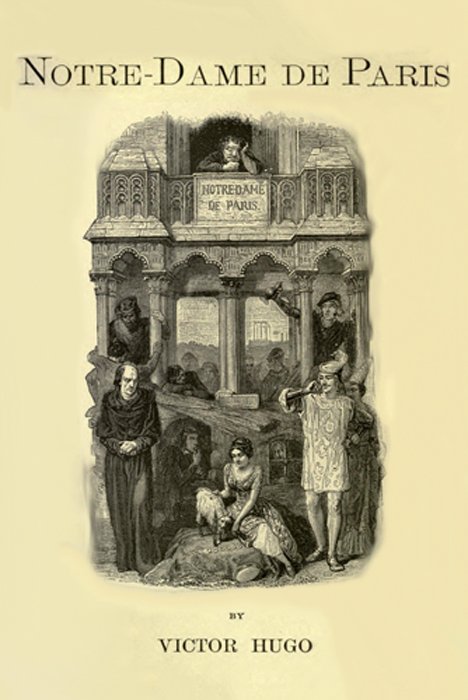




Victor Hugo’s masterwork revolves around the Gothic cathedral of Notre-Dame de Paris in the fifteenth century, a monument that serves both as the central setting and a silent witness to a dark, tragic drama. The plot intertwines the lives of several distinct figures: Quasimodo, the deaf and horribly deformed bellringer of the cathedral; Claude Frollo, the austere, brilliant, and deeply conflicted archdeacon who adopted him; and Esmeralda, a young, free-spirited gypsy dancer whose striking beauty captivates all who see her. The narrative examines the destructive nature of unrequited obsession, as Frollo’s consuming passion for Esmeralda leads him down a path of moral ruin and jealousy. Quasimodo, whose devotion to Frollo is absolute, finds himself torn between his fierce loyalty to his master and his pure, protective love for the gypsy girl who once showed him a rare moment of kindness.
Around this central emotional triangle swirls the bustling, brutal life of medieval Paris, from the courts of law and the intellectual ferment of the university to the criminal underworld of the Cour des Miracles. Hugo poses profound questions about fate, justice, and the cruelty of a society that judges individuals by their physical appearance rather than their inner worth. As the storylines converge, political intrigue, mob violence, and personal betrayals push the characters toward an inevitable reckoning. The narrative builds through a series of dramatic reversals, contrasting the rigid laws of the state and church with the raw, chaotic impulses of humanity. Without revealing the final resolution, the novel gently guides the reader toward a sombre conclusion where architectural permanence outlasts the fleeting tragedies of human existence, leaving behind a haunting meditation on love, suffering, and destiny.