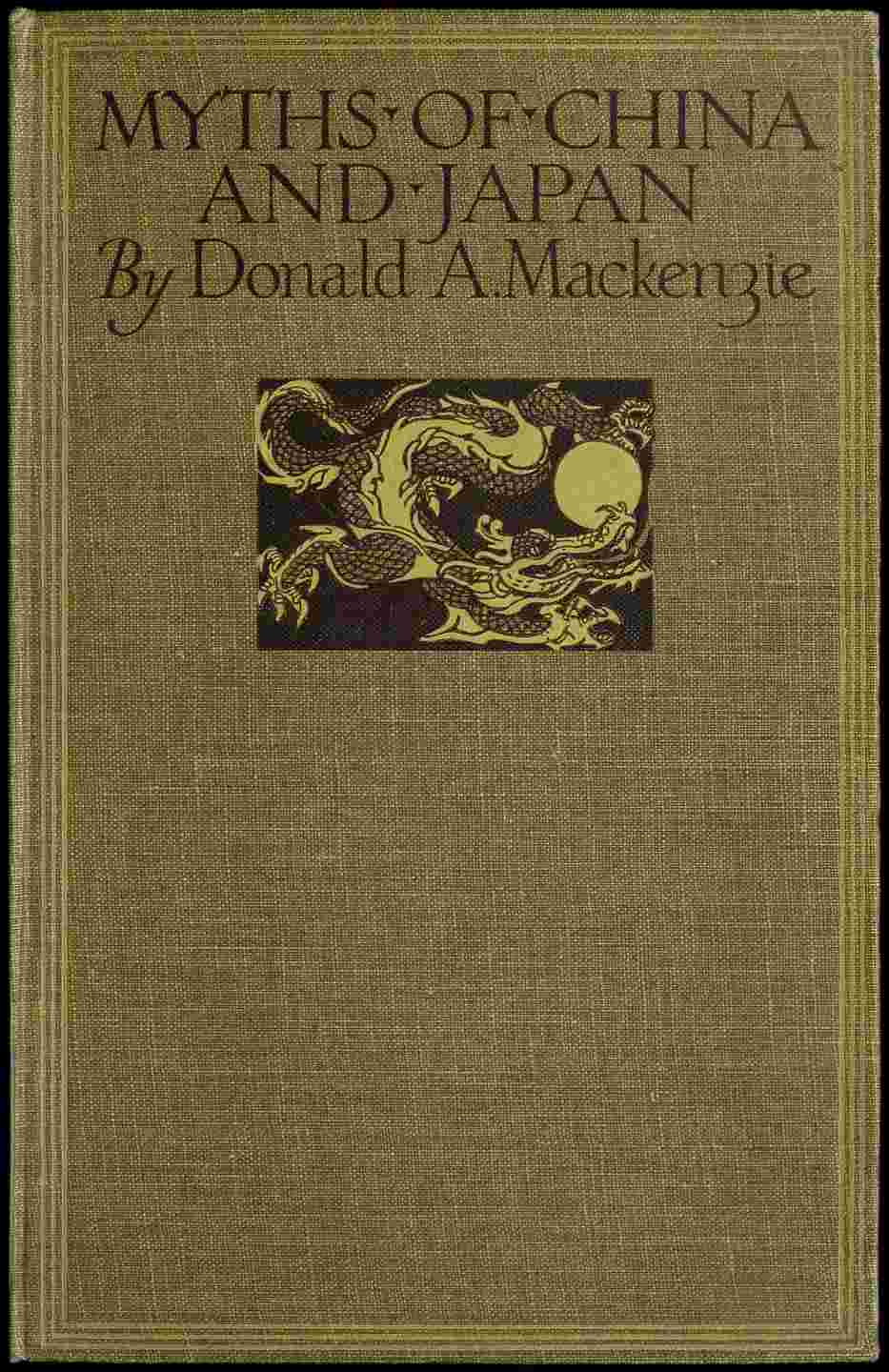

The work opens by challenging the notion of complete isolation in ancient civilizations, arguing that Chinese and Japanese cultures are the result of amalgamation and the diffusion of ideas from older centers. The author traces how cultural elements, such as the potter's wheel and shipbuilding techniques, originated in ancient Egypt and spread along trade routes, carrying with them religious beliefs and practices. A major focus is placed on dragon lore, comparing the Chinese dragon with the Indian Naga, the Babylonian Tiamat, and serpent figures in Egyptian mythology, demonstrating how these composite beasts share common attributes as water and rain deities, guardians of treasure, and symbols of imperial power. The narrative explores bird and serpent myths, tracing the combat between the Horus hawk and the Set serpent back to the secretary bird of Africa and its influence on ancient sailors' imaginations.
Subsequent chapters delve into the quest for wealth, precious stones, pearls, and the search for the Elixir of Life, connecting these quests to the widespread worship of the Mother Goddess. The author describes the belief in the Islands of the Blest, the World Tree, and the Well of Life, drawing parallels between Far Eastern paradises and those of the Mediterranean, Celtic, and Mesopotamian traditions. Throughout the text, the author utilizes the comparative method to demonstrate that complex legends, from the story of the Deluge to the motif of the dragon-slayer, are not independent native inventions, but the products of ancient culture-mixing and maritime exploration.