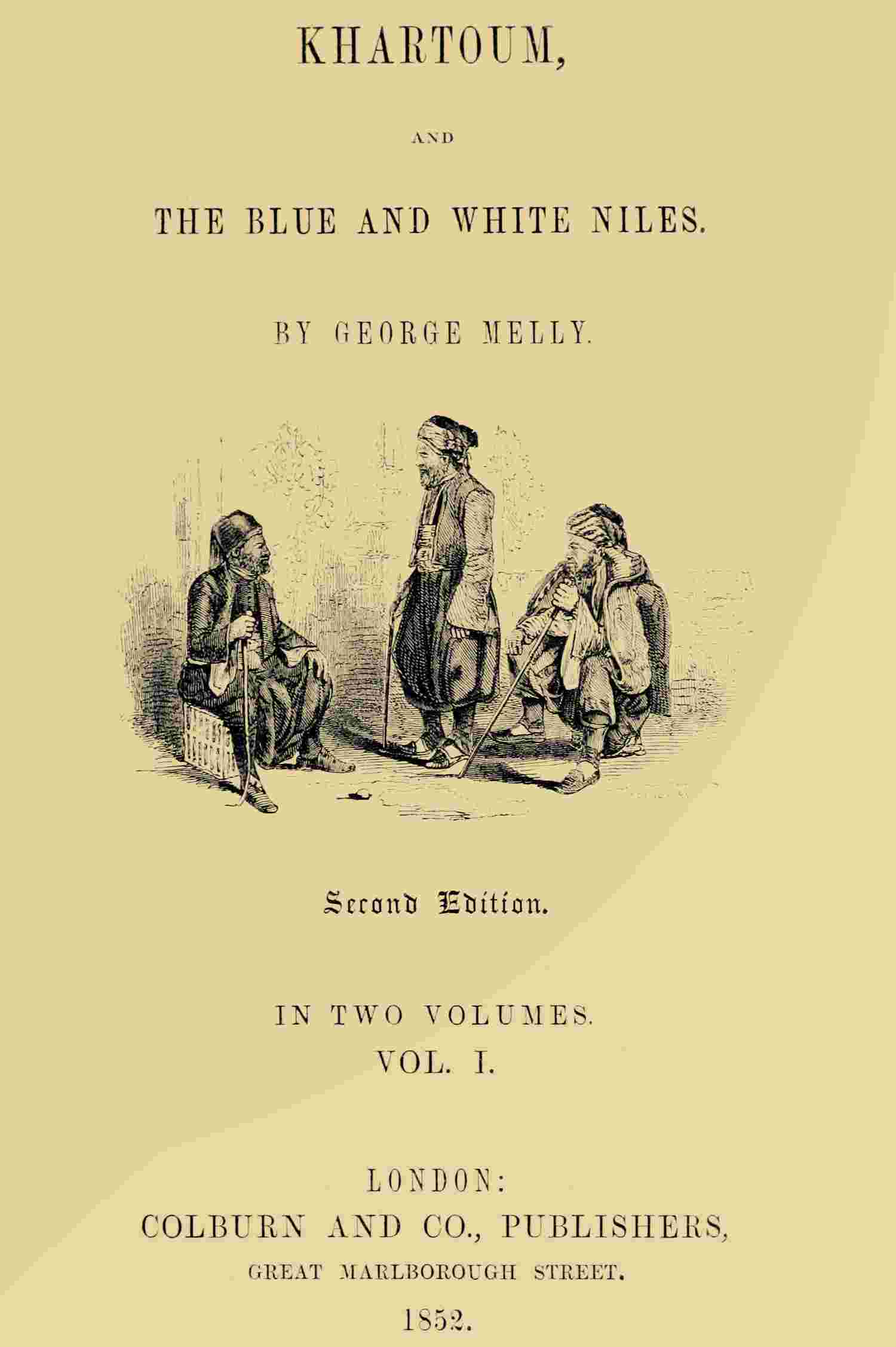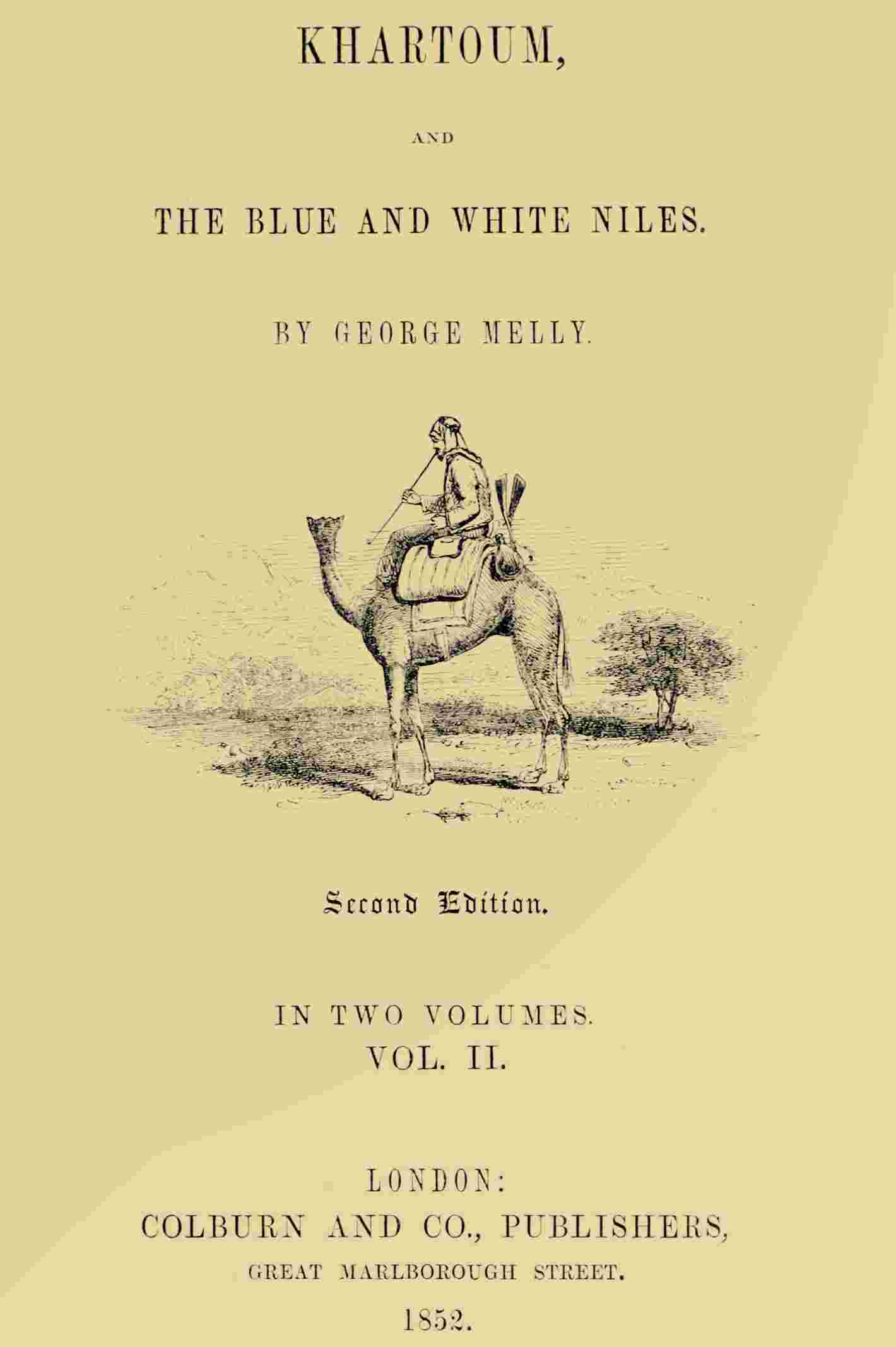



George Melly and his party undertake a demanding journey across the Nubian Desert, departing from Wadi Halfa by camel caravan toward Khartoum. The narrative details the daily mechanics of desert transit, including the stubborn behavior of transport animals, the freezing desert nights contrasted with scorching days, and the reliance on local guides to navigate waterless stretches. Along the route, the travellers encounter diverse populations, including Bedouin tribes, Nubian villagers, and Catholic missionaries, while observing ancient monuments such as the temples at Samneh and the pyramids of Meroe.
Upon reaching Khartoum, the author describes the administrative center of the region under the rule of Latiffe Pasha. The text outlines the political atmosphere of the city, marked by the presence of European expatriates, exiled Ottoman officials, and military garrisons. The description extends to local commerce, agricultural practices along the riverbanks, and the social structures of the region, emphasizing the absolute nature of local governance and taxation.
The return journey retraces the route northward along the Nile through Berber and across the Bayiuda Desert. The party encounters various logistical hurdles, shifting weather patterns, and the physical toll of the environment, culminating in a personal loss that alters the tone of the expedition. The narrative concludes with the rapid descent of the river via dahabeeyeh back to Cairo, observing the landscape and population under the changing administrative policies of the period.