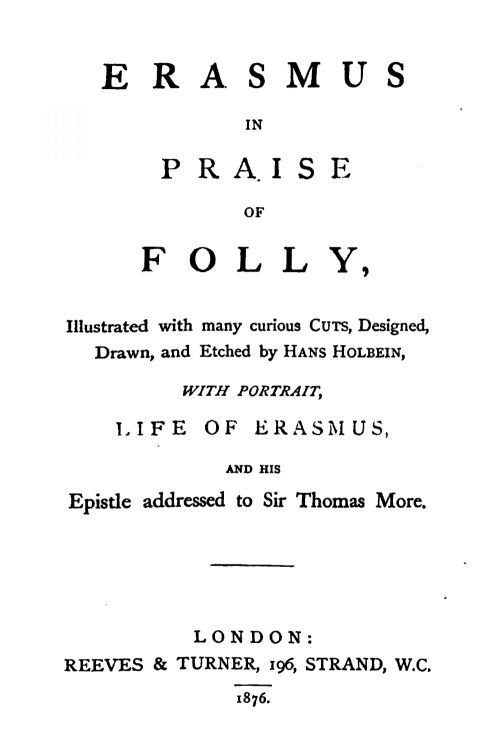



Desiderius Erasmus uses his satirical masterpiece, In Praise of Folly, to present an extended oration delivered by personified Folly. She argues that reason and strict wisdom lead only to isolation, misery, and paralysis, while illusion, self-love, and uncritical joy sustain human life from infancy to old age.
The argument moves systematically through all strata of society, demonstrating that every social bond relies on mutual deception and the willingness to overlook faults. Friendship, marriage, and civil society would collapse without the softening influence of flattery and minor delusions. Through this lens, ordinary people and happy fools navigate existence with far greater ease than solemn intellectuals.
Erasmus then turns his critique toward the learned professions. Grammarians, poets, and scientists are depicted as trapped in labyrinthine pedantry, deriving immense satisfaction from trivial pursuits while remaining utterly useless to society. The pursuit of absolute knowledge is shown to breed arrogance and despair rather than virtue or true understanding.
The critique deepens as Erasmus examines theologians and religious authorities. He lambasts scholastic theologians for reducing living faith to hair-splitting, irreverent categorizations and endless disputations about obscure doctrines. Monks and ecclesiastics are similarly exposed for trading the simplicity of the gospel for rigid external ceremonies, empty rules, and financial greed.
Princes and courtiers receive an equally unsparing evaluation. Those who sit at the helm of power are burdened by the inescapable demands of statecraft yet routinely abandon duty for luxury, war, and self-aggrandizement, relying on flatterers to shield them from unpleasant truths. Yet even here, Folly reigns supreme as the true manager of political stability.
In the final movement, the text elevates folly into a profound theological paradox. Erasmus suggests that the highest Christian truths—such as the incarnation, the cross, and divine grace—resemble madness to the worldly wise. The truly devout soul abandons earthly prudence for a childlike simplicity, finding ultimate fulfillment in an ecstatic union with the divine that transcends rational comprehension.