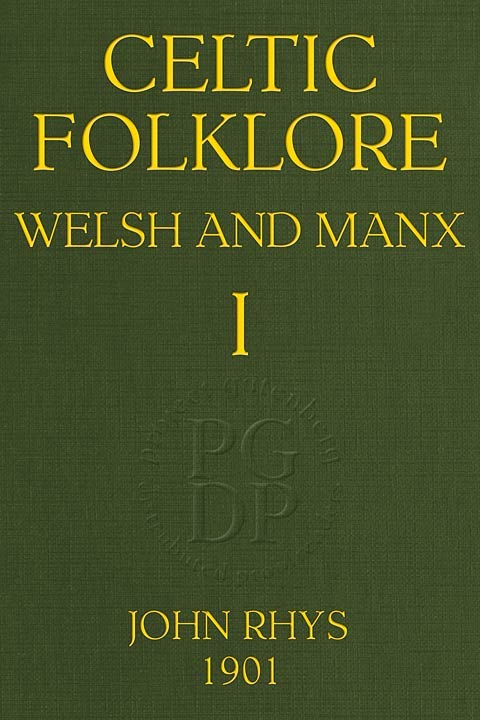


The work opens with an extensive collection of Welsh lake legends, centered most prominently on the famous tale of the Lady of Ỻyn y Fan Fach in Carmarthenshire. The author details how a young herdsman entices a mysterious maiden from the waters of the mountain tarn to become his bride, on the condition that he never strike her without cause. Their subsequent marriage, the birth of their sons who become the legendary Physicians of Myđfai, and her inevitable return to the lake waters form a foundational narrative that is compared with numerous similar regional variants from other Welsh counties. The text examines the complex group of ideas associated with the little people, or Tylwyth Teg, arguing that these beliefs stem from a dual origin involving both historical memories of real races and imaginative mythology rooted in ancient water-worship.
Subsequent chapters explore Manx folklore, detailing the fenodyree, local charmers, witchcraft practices, and traditional agricultural festivals like May-day and Hollantide. The narrative continues through an extensive study of sacred and wishing wells, ancient cave legends concerning sleeping heroes such as Arthur and Owen Lawgoch, and detailed etymological place-name stories involving heroic wild boar hunts. Toward the conclusion, the author addresses the difficulties faced by folklorists in separating genuine historical survival from superstitious accretions, analyzing primitive modes of thought regarding the human soul, shape-shifting, and the magical power attributed to names. The volume closes with a profound consideration of race in folklore and myth, suggesting that non-Aryan elements preserved in neo-Celtic syntax and primitive legends point toward the earliest pre-Celtic inhabitants of the British Isles, including the neolithic dwarfs and the Picts.