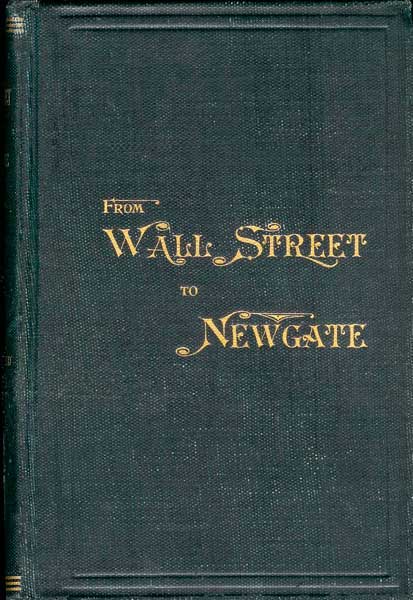




Austin Bidwell opens his autobiography by reflecting on his inadequate education in South Brooklyn, where he was left unequipped for the realities of life by a home and school environment that emphasized the spiritual over practical worldly wisdom. Launched into the bustling chaos of Wall Street as a sixteen-year-old, he quickly falls under the influence of reckless peers and stumbles into profitable stock speculations and late-night gambling in elite New York dens. Drawn deeper into a life of luxury and debt, Bidwell crosses paths with corrupt Chief Detective James Irving and his confederates, who draw him into a web of police protection rackets and eventually propose a massive bond fraud.
The narrative shifts to the era's grand financial crimes, detailing the notorious Lord Bond robbery executed by opportunistic thieves with police collusion, and illustrating the rampant corruption under Boss Tweed's New York administration. Seduced by the prospect of easy wealth to maintain his extravagant lifestyle, Bidwell agrees to carry stolen government bonds to Europe. Armed with stolen securities and glowing confidence, he successfully negotiates the bonds with major bankers in Frankfort, reaping a fortune while convincing himself he can stop at any time. His European travels bring encounters with colorful adventurers, including the notorious adventuress Elizabeth von Tromp.
Returning to New York a wealthy man, Bidwell is immediately drawn into a new conspiracy by Irving and his associates—the masterminding of a colossal bank burglary executed by professional criminals with the complicity of a corrupt bank president. Despite fleeting pangs of conscience, Bidwell continues his descent into the Primrose Way, engaging in further elaborate forgery schemes with former Queen's Counsel Edwin James and other co-conspirators. The narrative follows these complex webs of crime, highlighting how greed, flawed moral foundations, and the illusory promise of quick riches systematically dismantle the lives of everyone involved.
Bidwell's story reaches its historical core as he and his associates turn their sights across the Atlantic toward the ultimate prize: the Bank of England. Believing the ancient institution's centuries-old methods are vulnerable to audacious manipulation, Bidwell establishes himself in London as the wealthy American capitalist 'F. A. Warren.' Through meticulous preparation, false identities, and a network of genuine and forged bills of exchange, the conspirators systematically build massive credit. They enlist a trusted American friend, Edwin Noyes, as a courier to manage securities and bank transactions while Bidwell operates between London and continental financial capitals.
The unfolding plot details the psychological toll of their illicit enterprise, the intricate mechanics of their financial maneuvers, and the false sense of security that blinds them to the impending catastrophe. Bidwell's recollections serve not only as a vivid historical document of nineteenth-century criminal undergrounds, policing, and high finance, but also as a profound moral confession. He traces the relentless momentum of wrongdoing, demonstrating how ambition, misplaced trust, and the intoxicating pursuit of luxury inevitably trap the perpetrator in an inescapable web of retribution.