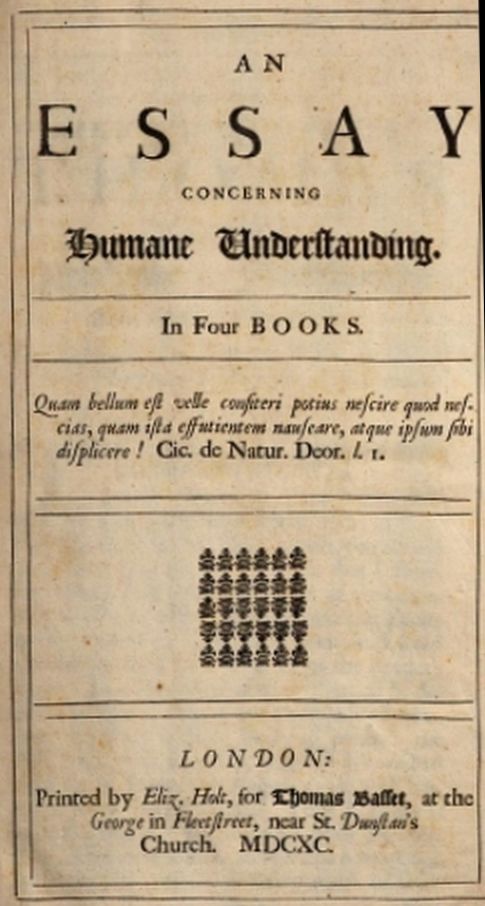
The work begins with a comprehensive refutation of innate principles and ideas, both speculative and practical, demonstrating through anthropological and psychological observations that children, uneducated individuals, and entire cultures do not share universal concepts of morality, identity, or even the divine. Locke establishes that universal assent does not prove nativism, since all accepted truths require prior acquisition of terms and ideas. He then outlines his positive epistemology, positing that the mind is a blank slate upon which experience writes. All materials of reason and knowledge derive exclusively from two fountains: sensation, which supplies perceptions of external physical objects, and reflection, which supplies awareness of internal mental operations.
The text further categorizes ideas into simple and complex, examining how the understanding combines, compares, and abstracts these basic building blocks to form complex notions of modes, substances, and relations. A significant portion is dedicated to distinguishing between primary qualities inherent in bodies, such as solidity and extension, and secondary qualities, such as color and taste, which exist only as powers to produce sensations in observers. Throughout the treatise, Locke emphasizes the necessity of examining words and ideas rigorously to avoid obscurity, advocating for empirical observation over blind adherence to traditional dogma.