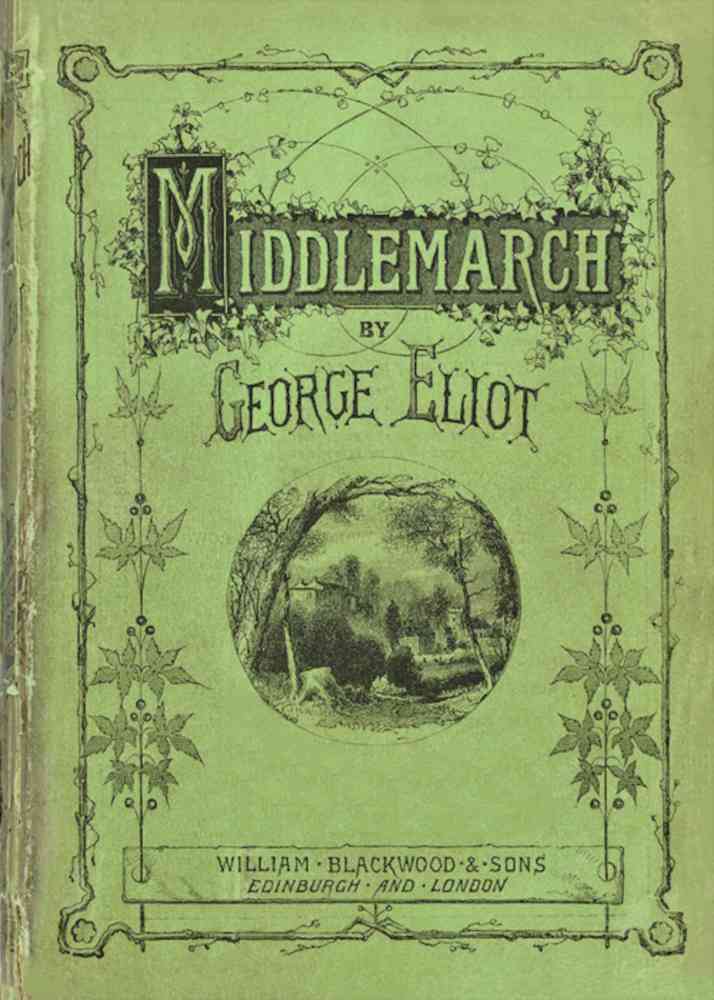




Middlemarch unfolds in a fictional Midland town on the eve of the political reforms of the eighteen thirties, tracing the lives of various inhabitants whose private choices ripple through the community. At the narrative heart is Dorothea Brooke, an ardent young woman whose spiritual and intellectual hunger leads her to seek an epic life through devotion to a great purpose. Misled by her own idealism, she rejects the suitable and down-to-earth Sir James Chettam to marry Mr. Edward Casaubon, an older, pedantic scholar whom she envisions as a modern sage.
Expecting an initiation into profound learning and grand moral action, she gradually discovers that her husband’s mind is a dry, barren system of footnotes and that her marriage is a lonely confinement. Parallel to Dorothea's disillusionment are the trajectories of other townsfolk, most notably Tertius Lydgate, an ambitious young physician determined to revolutionize medical science in the provinces. Lydgate brings high reformist zeal to Middlemarch, yet his professional aspirations become entangled with local politics, financial miscalculations, and a fatal attraction to Rosamond Vincy, a vain and beautifully accomplished young woman whose superficial gentility conceals an inflexible selfishness.
As Lydgate's grand scientific visions are slowly ground down by debt and domestic incompatibility, other figures navigate their own moral compromises and modest redemptions. Mary Garth, plain-spoken and clear-sighted, refuses to trade her integrity for financial expediency, standing in sharp contrast to Fred Vincy, her affectionate but chronically idle suitor who struggles to find a legitimate footing in a society obsessed with status and property. Through these interlocking lives, the author portrays the quiet tragedy of thwarted potential, the invisible bonds of human interdependence, and the difficult process by which imperfect mortals learn to reconcile their vast desires with the narrow limits of their opportunity. The narrative moves toward a profound meditation on the unhistoric acts of those who live faithfully in a hidden life and rest in unvisited tombs.