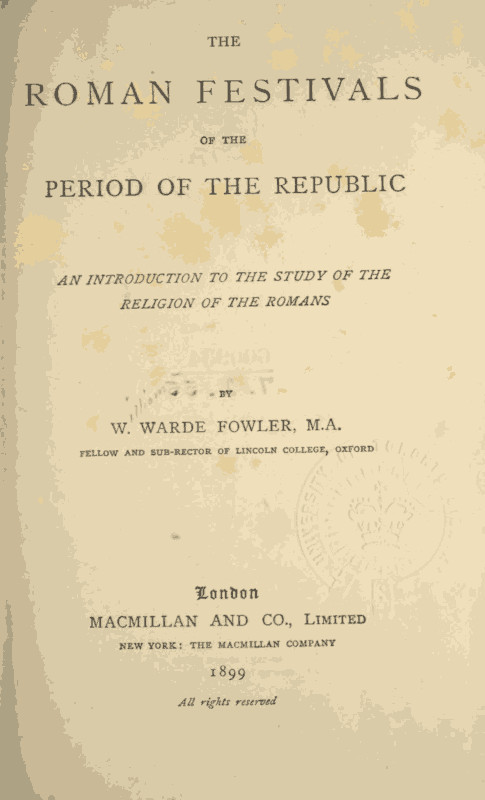






This authoritative historical study examines the religious evolution of the Roman people from the earliest prehistoric survivals to the age of the Augustan revival and the dawn of Christianity. The author traces how primitive animism, taboo, and domestic worship gradually crystallised into the formalised religious system of the Roman City-state. The work demonstrates how the domestic religion of the agricultural family, centred around the hearth and the homestead, laid the permanent moral and ritual foundation for the entire civilization. As the city grew, this domestic worship was systematized into an elaborate code of sacred law and calendar routine under the direction of priestly colleges like the pontifices and augurs.
The volume explores the principal deities of early Rome, the rigid procedures of sacrifice and prayer, and the various methods of divination intended to secure the favour of the gods. A central theme is the gradual inadequacy of this formal, legalistic religion when confronted with the expanding horizons of the Mediterranean world, trade, and foreign conquests. This failure of traditional forms led to moral destitution, the influx of Greek philosophy, Stoicism, and Oriental mysticism, and ultimately to a desperate search for individual spiritual salvation. The study concludes with an analysis of how the ancient Roman virtues of duty, order, and pietas prepared the spiritual soil for the reception of Christian ideals.