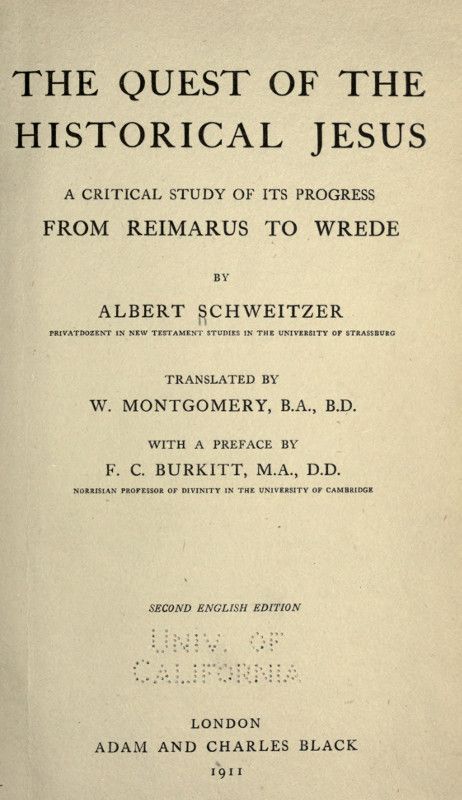





Albert Schweitzer's historical survey investigates how generations of scholars endeavoured to grasp the historical personality of Jesus. The study begins with Reimarus, who first recognized the essentially eschatological world-thought of Jesus, though he misinterpreted it as political revolution. Subsequent chapters analyze the early rationalistic lives of Jesus by writers such as Paulus and Hess, who attempted to naturalize miracle stories through strained historical expedients, and the transitional views of Hase and Schleiermacher.
The central turning point arrived with David Friedrich Strauss, whose rigorous application of the mythological method challenged both supernaturalism and rationalism. Strauss systematically analyzed the contradictions within the Gospel narratives, particularly demonstrating the theological tendencies of the Fourth Gospel compared to the Synoptics. By subjecting every narrative to detailed criticism, he exposed the impossibility of traditional harmonizations and opened the path for genuine historical inquiry.
The subsequent controversies and conservative reactions showed the deep resistance of ecclesiastical theology to these critical conclusions. Apologists like Tholuck and Neander attempted various compromises to preserve the miraculous elements, while others recognized the permanent destruction of traditional dogmatic assumptions. The work underscores the profound tension between the historical Jesus and the later dogmatic Christ of faith.
Ultimately, Schweitzer demonstrates that the life of Jesus cannot be understood through modern secular categories or softened by psychological reconstructions. Jesus must be interpreted with reference to His own time, grounded firmly in the late Jewish apocalyptic and eschatological worldview. This realization forces a recognition that the original Gospel was built upon an expectation of imminent cosmic transformation, which later generations had to spiritualize and translate into enduring symbols.
The inquiry concludes that the historical Quest is a relentless school of honesty for theology. By clearing away the accumulated layers of dogma and artificial harmony, the historical method restores the true complexity of the ancient texts. Though the definitive life of Jesus remains elusive through ordinary historical tools, the struggle for truth brings the modern religious consciousness into direct confrontation with the core enthusiasm of the Christian hope.