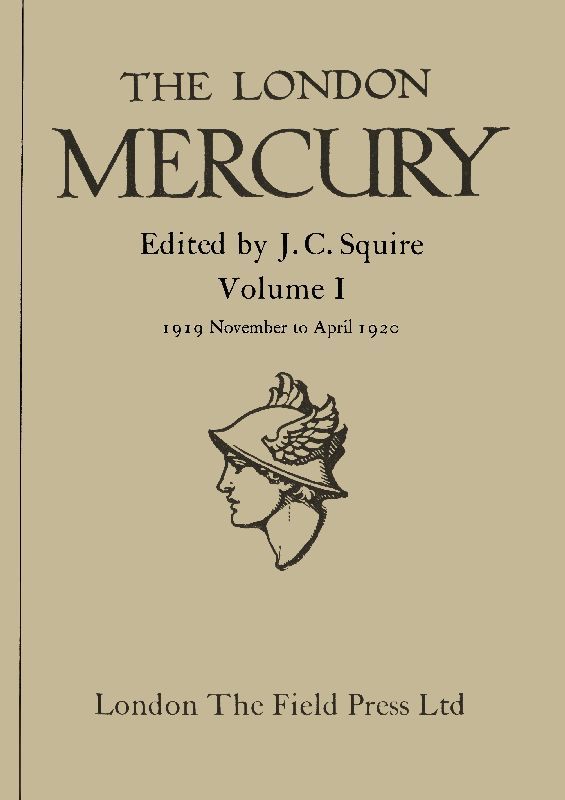

The work opens with an editorial manifesto on the establishment of the London Mercury, declaring the necessity of preserving high literary standards against the anarchy of modern affectation and mere novelty. It surveys the condition of contemporary criticism, condemning both the timid indulgence of mediocrity and the wild experiments of the younger anarchists who sacrifice fundamental truth to sensationalism. Throughout various critical essays, the volume addresses the style of Horace Walpole, the poetry of the Caroline era, the teaching of English in schools, and the nature of negative particles in grammar. The argument deepens into an examination of the relation between contemporary life and the future poet, questioning which modern figures and episodes will survive in the imagination of posterity.
It presents detailed studies of George Eliot, her genius and her limitations, and her search for intellectual depth. The critical pieces unite in the conviction that true art must rest upon the solid rock of tradition, observation, and authentic emotion. The collection closes with bibliographical notes and reviews, emphasizing the necessity of a sound historical sense and a disciplined respect for the English language.