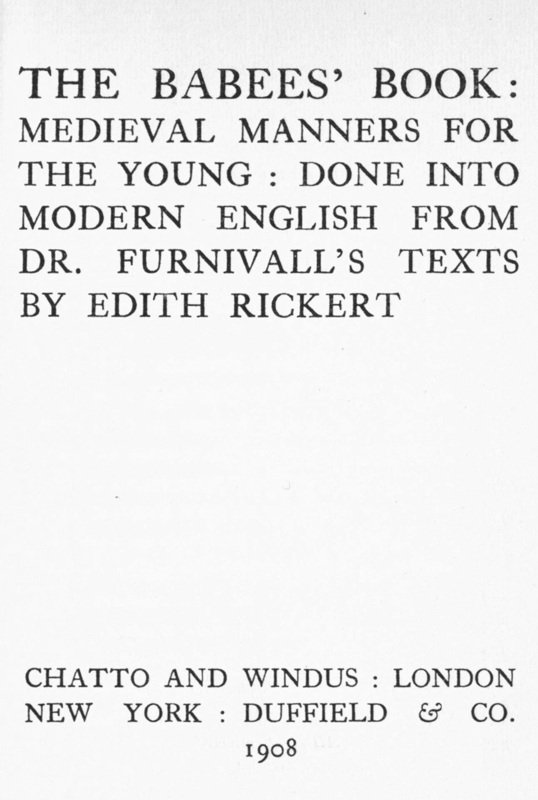





This collection of medieval courtesy books, brought together from the texts edited by Doctor Furnivall and translated into modern English by Edith Rickert, presents a vivid and comprehensive picture of domestic life, education, and social customs in medieval and early modern England. The primary problem addressed throughout these diverse treatises is how to transform unruly, unrefined children into courteous, virtuous members of society who respect social hierarchy, maintain personal hygiene, and display proper self-control. The author unfolds this argument through a series of didactic poems and prose manuals, beginning with The Babees' Book, which instructs young nobles on how to behave when serving at a lord's table. Subsequent treatises, such as Urbanitatis, The Little Children's Little Book, and the parental instructions given by the Good Wife and the Wise Man, expand these lessons to cover general conduct, church behavior, honesty in speech, and the avoidance of vice.
Detailed operational guides, notably John Russell's Book of Nurture and the later works by Hugh Rhodes and Francis Seager, offer exhaustive technical instructions for household officers, including the butler, panter, chamberlain, carver, sewer, and marshal, prescribing exact methods for carving meat, laying tablecloths, and seating guests according to their precise social rank. The texts starkly contrast the outward splendor of medieval castles with the crude domestic realities of the era, emphasizing that personal cleanliness, self-respect, reverence toward superiors, and consideration for one's neighbors form the unchanging foundation of good manners. Ultimately, the work demonstrates that while specific social expedients and ceremonies evolve with the introduction of new utensils and conditions, the fundamental principles of human courtesy and moral discipline remain constant.