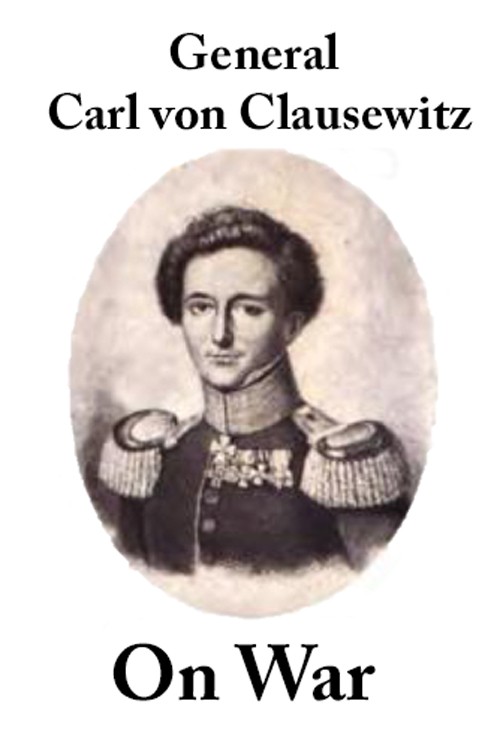





Carl von Clausewitz begins by defining war as an act of violence intended to compel an opponent to fulfill one's will, noting that the logical extreme of violence is rarely attained due to the moderating influence of real-world constraints. He distinguishes between the absolute conception of war and its practical reality, where political objects, limited means, and the friction of uncertainty alter the course of hostilities. The text emphasizes that war is never an isolated act, but rather a continuous interaction of hostile forces driven by both physical power and moral resolve. The author explores the nature of military genius, highlighting the essential qualities required of a commander, such as coup d'oeil, resolution, presence of mind, and the strength of character needed to withstand extreme physical and psychological pressure.
Danger, bodily exertion, unreliable information, and constant friction are identified as the primary elements that transform simple tactical movements into extraordinarily difficult real-world operations. The distinction between tactics and strategy is established, separating the art of the separate combat from the art of using combats to achieve the ultimate objective of the war. Clausewitz argues against rigid, formulaic systems and geometrical abstractions, asserting instead that military theory must serve as an analytical guide rather than a mechanical rulebook. Ultimately, the work demonstrates how political policy remains inextricably interwoven with military action throughout the duration of a campaign, determining both the aims pursued and the scale of effort required.