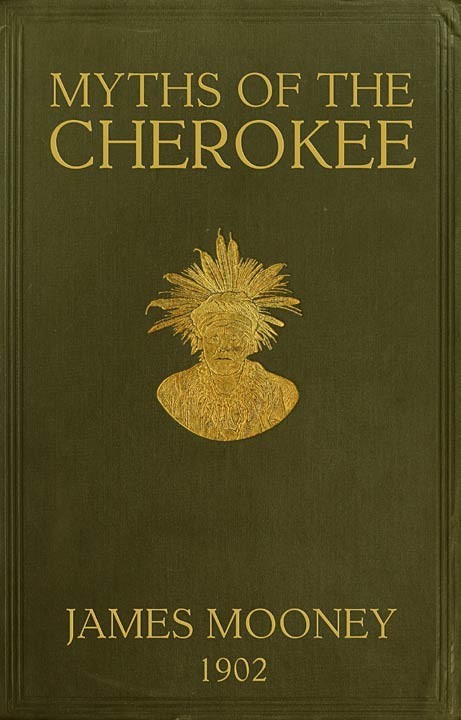





James Mooney's comprehensive monograph documents the heritage, mythology, and historical progression of the Cherokee people, drawing upon original manuscripts, field research, and historical records. The work is divided into a detailed historical sketch and a vast collection of tribal legends, recording how the Cherokee engaged with successive waves of Spanish explorers, British traders, and American settlers. The narrative traces the territorial evolution of the Nation, from its vast mountain domains across the southern Alleghenies down to the pressures of colonial expansion and the ultimate tragedies of the removal period.
The historical account documents early interactions with the Spanish expeditions of Hernando de Soto and Juan Pardo, detailing the pursuit of mineral wealth and the establishment of early trade relations. It follows the shifts in tribal geography, the chronic conflicts with neighboring groups such as the Creeks, Catawba, and Iroquois, and the complex alliances during the French and Indian War and the American Revolution. The text records the systematic reduction of Cherokee territory through successive treaties and the rise of internal factions that divided the conservative mountain element from the progressive leadership.
Significant attention is given to the remarkable cultural evolution of the Cherokee during the early nineteenth century. This era witnessed the adoption of a written constitution, the establishment of a national press, and the revolutionary creation of the Cherokee syllabary by Sequoya, which enabled widespread literacy among the people. Despite these extraordinary strides toward civilization, the discovery of gold within their borders intensified the pressure from the state of Georgia and federal authorities to force an evacuation of their ancestral lands.
The volume meticulously records the legal battles, the arbitrary enforcement of state laws within the reservation, and the ultimate division of the Nation through the negotiation of the controversial Treaty of New Echota. This compact set the stage for the tragic expulsion known as the Trail of Tears, scattering the people westward while leaving a resilient remnant preserved within the secluded valleys of the Carolina mountains.
Throughout the collection, the author preserves the texture of traditional Cherokee life, including descriptions of home arts, medico-religious theory, ball games, and spiritual beliefs. The legends themselves recount the origins of natural phenomena, animals, and sacred landmarks, reflecting the worldview of a people deeply rooted in their mountainous environment. The narrative closes on the eve of the great westward migration, marking the end of an era for the indigenous inhabitants of the southern highlands.