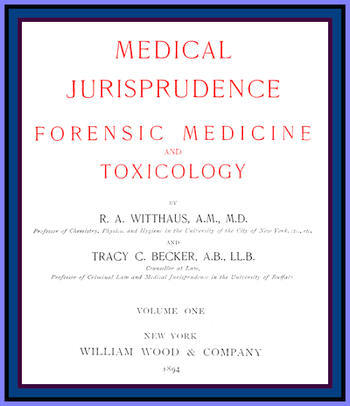






This authoritative legal and medical treatise examines the foundations of state medicine, distinguishing between medical jurisprudence and forensic medicine. The authors trace the historical evolution of medical legislation from ancient Egyptian and Greek codes to modern statutes, establishing the legal status of physicians and surgeons.
The text details the statutory requirements for acquiring the right to practise medicine, emphasizing that police powers authorize states to protect public health through licensing and educational standards. The authors explore the contractual nature of the relationship between physician and patient, outlining the reciprocal duties of care, skill, and compensation.
The volume addresses the complexities of expert testimony in courts of justice, analyzing the qualifications required of medical experts, the necessity of compensation for their opinions, and the practical challenges of the American expert witness system. The distinction between ordinary and expert witnesses is thoroughly examined.
Malpractice is defined through wilful acts, statutory violations, and negligence. The authors detail the legal standards of ordinary care and skill required of practitioners, discussing the implications of experimentation and contributory negligence.
The work concludes with an extensive analysis of the law of evidence concerning confidential communications between physician and patient. The authors contrast the common law rule with modern statutory restrictions, analyzing the nature of privileged information, waiver, and exceptions in various jurisdictions.