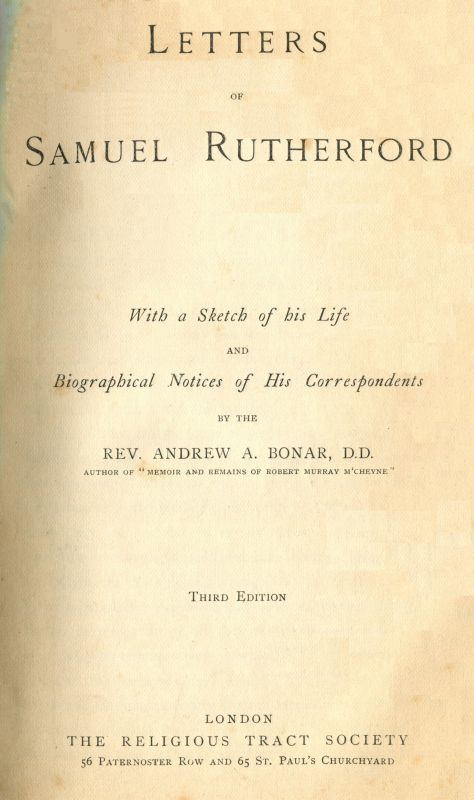





Samuel Rutherford's correspondence forms a unique monument of Christian literature, capturing the intense spiritual communion between a devoted pastor and his flock, nobility, and fellow ministers across seventeenth-century Scotland. Banned from his parish in Anwoth and exiled to Aberdeen for nonconformity, Rutherford poured his soul into hundreds of letters that explore the paradox of finding joy, freedom, and intimacy with God within the depths of severe suffering. The central problem he addresses is the soul's tendency to drift toward worldly comforts and spiritual lukewarmness, relying on visible temporal securities rather than an invisible Saviour. His argument develops not through dry academic theology, but by presenting Christ as an all-satisfying, living person whose love is both a refuge in affliction and a consuming fire that purifies the believer.
Throughout the collection, Rutherford returns repeatedly to the necessity of self-denial, the holy purpose behind divine chastisement, and the anticipation of the heavenly marriage supper. He warns against compromise, urges steadfast adherence to biblical truth against prelatic impositions, and counsels the bereaved to view earthly losses as a gentle loosening of the roots from a dying world. The text brims with pastoral tenderness, addressing each correspondent according to their particular spiritual state, whether facing physical illness, bereavement, or public persecution. While the historical backdrop is saturated with the trials of the Scottish Covenanters, the enduring substance lies in the elevation of Christ's kingly office and the incomparable loveliness of His grace. The letters gently point the reader toward an eternal horizon where every earthly sorrow is swallowed up in the unclouded presence of the Redeemer.