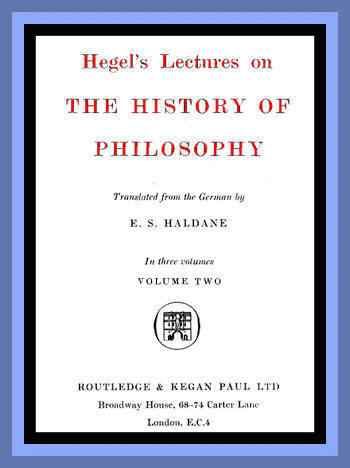



This volume of Hegel's lectures on the history of philosophy focuses heavily on the towering figures of Plato and Aristotle, examining how their monumental systems shaped the trajectory of Western intellectual history. Hegel explores Plato's doctrine of ideas, his dialectical method, and his vision of the state, while carefully distinguishing between the metaphorical use of myth and the rigorous demands of pure speculative thought. He addresses the complex relationship between the universal and the particular, the nature of knowledge as recollection, and the structural unity of the moral soul and the political commonwealth. Transitioning to Aristotle, Hegel rescues his philosophy from superficial modern caricatures of crude empiricism, demonstrating that Aristotle represents the pinnacle of speculative depth.
He details Aristotle's conception of potentiality and actuality, the unmoved mover as pure active thought, and the teleological nature of physics and nature. Throughout, the text illustrates how these ancient thinkers laid the foundational logic that connects objective reality to the divine and rational activity of mind. The discussion concludes by examining how these classical ideas form the necessary stepping stones toward a higher comprehension of spirit and reality.