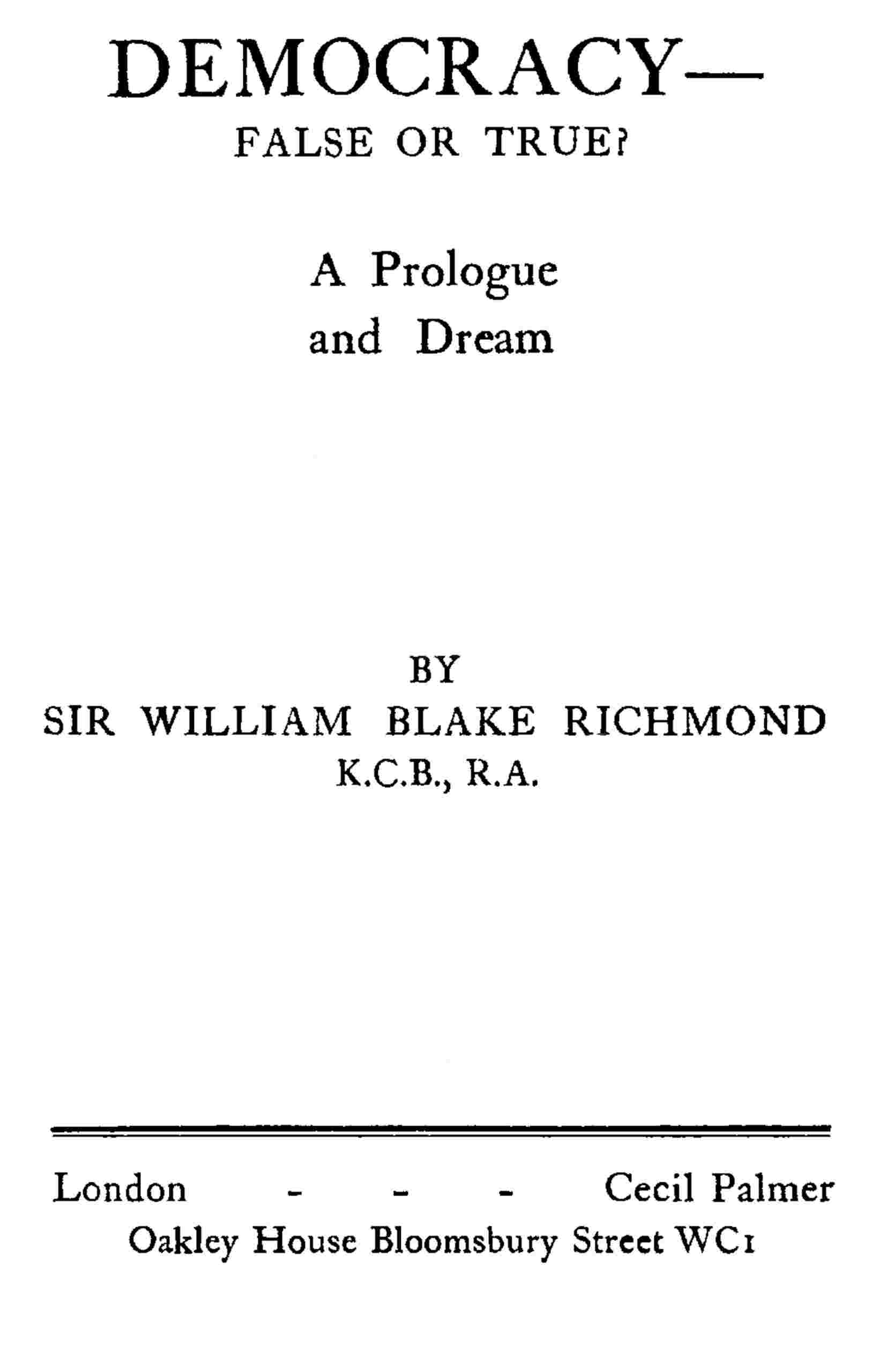





The book opens with a prophetic reflection on the decay of modern British society, poisoned by the relentless march of industrialism and the worship of material wealth. The author laments how fertile agricultural lands have been replaced by smoking factories, leaving the populace physically diminished and spiritually starved. A major problem posed is the rise of class warfare, fomented by ignorant agitators and greedy tradesmen who exploited wartime distress, pushing the nation toward anarchy.
The argument develops through a detailed contrast between the destructive artificiality of modern urban life and the timeless values found in ancient civilizations like Egypt and Greece, which built their cultures around noble ideals and reverence for nature. The author critiques the modern labor movement, arguing that trade unions have degenerated from champions of justice into tyrannical slave-drivers who demand high wages for poor work, thereby destroying national productivity and moral integrity.
To escape this downward spiral, the text proposes a radical return to simpler foundations: the revival of agriculture to ensure national self-sufficiency, the eradication of coal smoke and river pollution, and the restoration of honest craftsmanship. Education must be reformed from rote learning to the cultivation of character, duty to the neighbor, and the dignity of manual labor.
The narrative culminates in an extended allegorical dream of an idealized England governed by decentralized county communes. In this vision, society is structured around cooperation rather than class conflict, where citizens embrace both intellectual culture and honest toil. The book ends on a hopeful note, suggesting that through a conscious shift from the pursuit of gold to the cultivation of the human soul, the nation can reclaim its greatness without falling into totalitarian or anarchic traps.