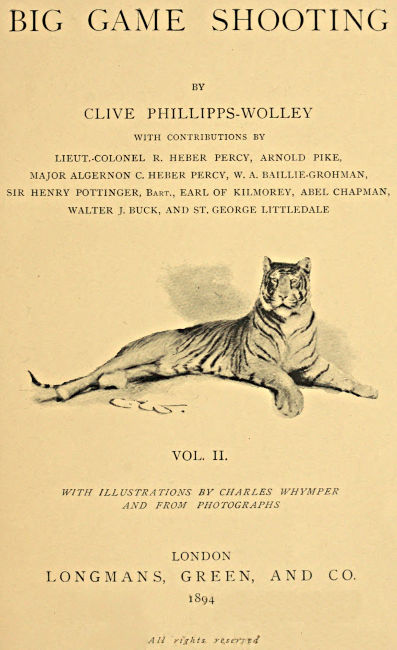





The book presents detailed accounts of big game hunting in two distinct and formidable regions: the Arctic seas around Spitzbergen and the high mountain ranges of the Caucasus. The first section details the pursuit of the walrus and the polar bear. The authors explain the exact anatomy of a walrus and where to place a bullet in its cranium to ensure instant death, noting that a leaden bullet striking the jaw-joint is flattened like putty. They describe the construction of the 'fangstbaad'—the specialized twenty-foot hunting boat—and the specific gear required, from the four-hundred-and-fifty express rifle to the Norwegian snow-shoes and mittens. The text details the relentless hunting that has thinned walrus herds and driven them to inaccessible regions, contrasting this with the polar bear, which offers less sporting challenge because it is easily spotted and vulnerable once forced into the water.
The second major section transports the reader to the Caucasus, detailing a completely different set of game and challenges. The authors describe the journey from London to Vladikavkaz and emphasize the necessity of travelling unpretentiously with minimal baggage, carried by men or pack ponies. They analyze the wild boar of the Kuban reed beds, noting their enormous size and ferocious courage when wounded, and detail methods for hunting them with hounds or waiting by wallows at night. The narrative covers the Caucasian red deer, or ollèn, comparing its size and antlers to the American wapiti, and explores the remote ironstone peaks where the tûr and ibex make their home.
Hunting mountain game requires extreme endurance, climbing dizzy slopes where villages sit at elevations of up to nine thousand feet. The authors explain the methods of the native Ossete hunters, who track tûr through mist and desolate crags. They recount specific stalks, highlighting the danger of sudden weather shifts, the optical illusions of the mountain mists, and the necessity of sleeping near the peaks to reach the shooting grounds by dawn. The narrative also examines the European bison, or aurochs, surviving in the dense timbered valleys, and provides observations on the rare Caucasian mountain bear and the fleet-footed djerân antelope on the dry steppes.
Throughout both sections, the writers maintain a focus on practical utility for the sportsman. They detail the exact dimensions of antlers and horns, the weights of animals, the prices of provisions and local wages, and the specific construction of native footwear like the skin moccasins stuffed with mountain grass. The work concludes with comprehensive chapters on chamois shooting in the Alps, the management of Scandinavian elk, and brown bear hunting in Russian Lapland, complete with firsthand accounts of winter drives and solitary stalks in extreme cold.