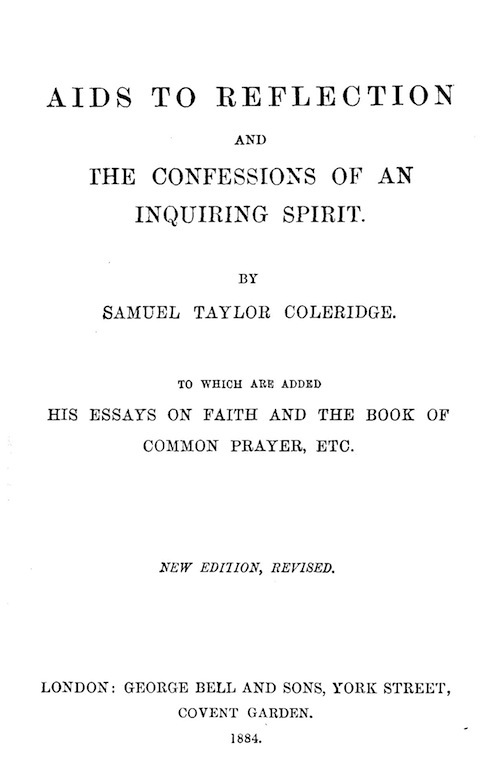




Coleridge constructs a comprehensive framework for moral and spiritual development, separating human faculties into distinct categories of prudence, morality, and religion. He argues that true religion transcends mere worldly prudence and external ethics, residing instead within the deeper domain of the practical reason and the will. A central theme of the work is the vital distinction between the sensuous understanding, which operates mechanically within the realm of nature, and the universal reason, which connects humanity to the divine. The author addresses the dangers of superficial religious sentiment and ungrounded enthusiasm, emphasizing that genuine faith must be anchored in clear concepts and self-knowledge.
Throughout the text, passages from Archbishop Leighton are utilized to illustrate the sublime view of religion as the process of reforming the human soul in the divine image. The argument develops from basic self-superintendence toward an advanced spiritual state where the human will is brought into harmony with absolute reason. Ultimately, the work contends that Christian faith is not a mere speculation or a code of rules, but a living process and the perfection of human intelligence.