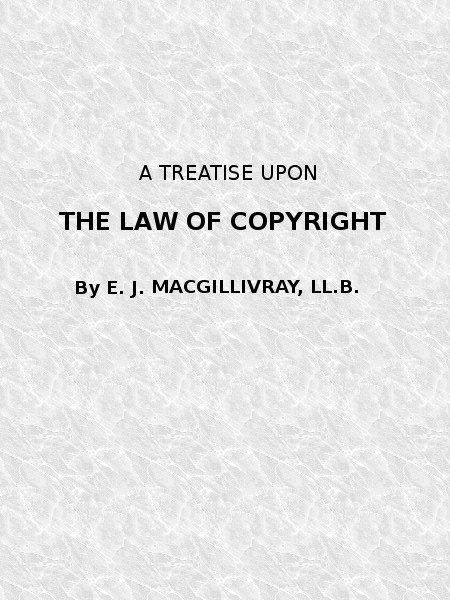




The work opens with an historical review of the royal prerogative, the Company of Stationers, and the Star Chamber, tracing the evolution of literary property from early licensing acts to the Statute of Anne and subsequent legislation. The author examines the foundational elements required for a book to be protected, including physical form, literary matter, and originality, analyzing how the courts treat directories, catalogues, tables, and reports.
The treatise then addresses the ownership of copyright, distinguishing between authors, employers, assignees, and licensees, with particular attention to the complex provisions governing collective works and periodicals. It evaluates the rules of publication, the distinctions between divestitive and investitive publication, and the unresolved questions surrounding the nationality and residence of authors.
Infringement forms a central part of the work, detailing the prohibited acts, the nature of piratical copies, and the remedies available, including damages, accounts of profits, injunctions, and the delivery up of infringing materials. The text explores the boundaries of fair use, the legality of abridgments and translations, and the strict requirements for registration and the delivery of copies to libraries.
Subsequent chapters address the specialized areas of performing rights for dramatic and musical compositions, copyright in engravings, sculpture, paintings, drawings, and photographs. The legal frameworks governing colonial copyright and international agreements, notably the Berne Convention, are methodically laid out alongside common law protections against passing off and breaches of confidence.
The treatise concludes with a detailed examination of publishing and printing agreements, supported by an extensive appendix comprising British and American statutes, international conventions, and a comprehensive table of English, Scotch, Irish, Indian, colonial, and American cases.