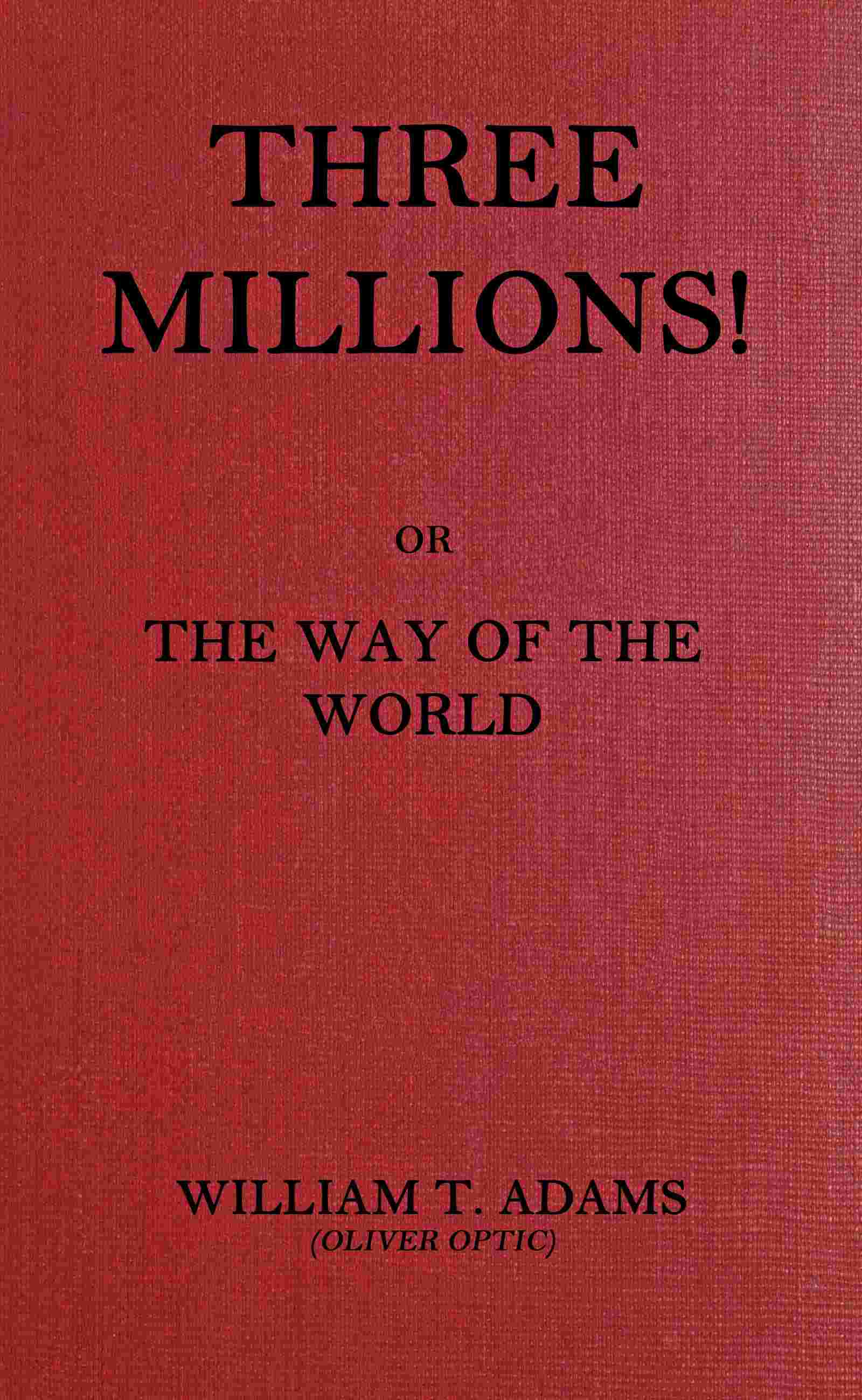



The story opens with the death of John Hungerford, a Baltimore millionaire who accumulated three million dollars through decades of relentless toil and simple living. Having no direct heirs of his own, he leaves his vast fortune to his nephew, Eugene Hungerford, under the strict condition that Eugene must marry and produce a son named John before turning thirty, otherwise the money will be heavily divided among relatives and charitable institutions. Eugene, a young man of high principles and independent spirit, returns to Poppleton, where he is immediately burdened by the sudden wealth and the societal expectations tied to it. Meanwhile, Eugene harbors a deep affection for Mary Kingman, a refined and intelligent girl whose life is overshadowed by her father's severe alcoholism.
When Mary is driven from her home by her father's violent threats, she is rescued by Eliot Buckstone, an artist of questionable character. Pressured by circumstance and loneliness, Mary flees with Buckstone, believing he intends to marry her. Eugene, paralyzed by excessive caution and his dread of being influenced by the contingent fortune, fails to declare his love in time, a delay that he later bitterly regrets.
Buckstone proves to be a deceitful scoundrel who eventually abandons Mary and cruelly informs her that their marriage was a sham. Driven by fierce protective loyalty, Mary's brother Ross tracks Buckstone down on the island and strikes him dead, casting the family into a deep legal and moral crisis. As the community reels from the murder and subsequent arrest, Eugene struggles with his own remorse, convinced that his hesitation ruined Mary's life. Despite the social stigma and the tragic events, Eugene remains steadfast in his devotion to Mary, resolving to rescue her from her sorrow and make her his wife. The novel concludes with a powerful meditation on the emptiness of inherited wealth when weighed against genuine human affection and integrity, showing how true redemption comes from love rather than money.