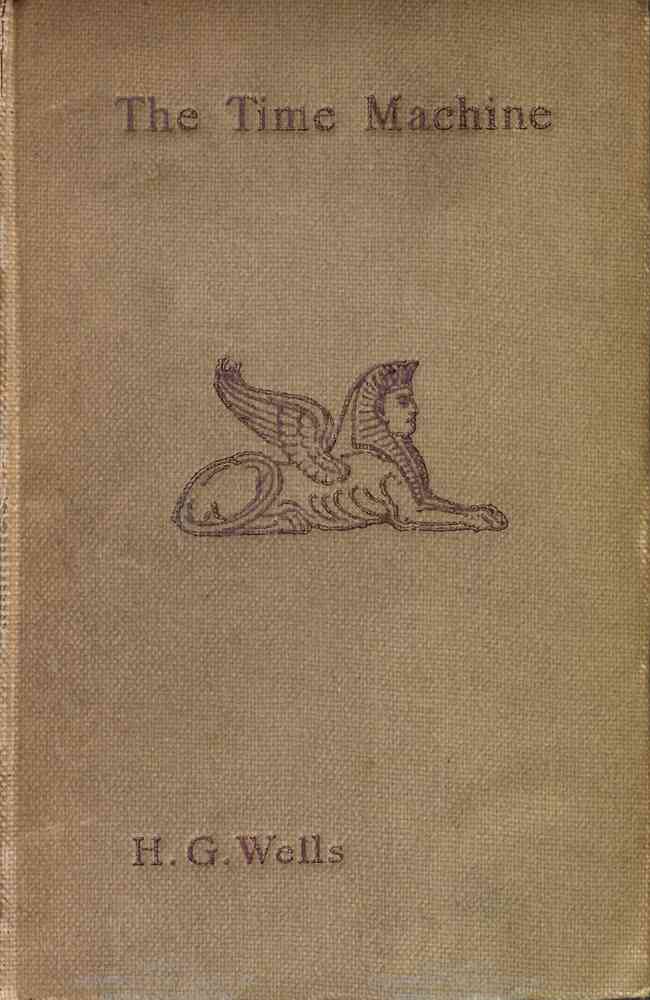



The narrative begins in a Victorian drawing room where an eccentric scientist demonstrates a miniature time machine before revealing a full-sized version intended for actual transit. Propelled forward through time, he arrives in the year eight hundred and twenty-seven thousand, one hundred. He finds a landscape dominated by vast ruins and populated by the Eloi, a delicate, indolent race who live without labor or danger. Initially, he interprets this society as a communist utopia where humanity has successfully conquered disease, struggle, and environmental hazards. However, the sudden disappearance of his time machine shatters this complacency and forces him to investigate deeper.
His investigations reveal a terrifying biological split in the human species. While the Eloi inhabit the sunlit surface as creatures of pure leisure, the subterranean Morlocks maintain the ancient machinery in total darkness. Over countless generations, the capitalist-laborer divide has evolved into a predator-prey relationship: the Morlocks rear the Eloi like cattle and harvest them for food. The protagonist explores this nightmarish underworld, barely escaping with his life after discovering the grim reality of human evolution under absolute safety.
Armed with matches and a makeshift iron mace, he struggles to survive against the nocturnal monsters and forms a poignant, protective bond with Weena, a fragile Eloi woman. During a frantic escape through a burning forest, Weena is lost to the flames and the marauding Morlocks. Eventually, he recovers his machine from the bronze pedestal of a sphinx and makes a series of frantic leaps further into the deep future. He witnesses the dying Earth millions of years hence under a swollen, motionless red sun, surrounded by sluggish giant crabs and creeping desolation.
Returning finally to his own laboratory just hours after his departure, the scientist recounts his incredible odyssey to a skeptical group of dinner guests. Though his friends remain unconvinced by the tale, the two withered white flowers in his pocket serve as tangible proof of his journey. The story concludes with the narrator reflecting on the fate of the missing traveler, who departed once more into time three years prior and never returned.