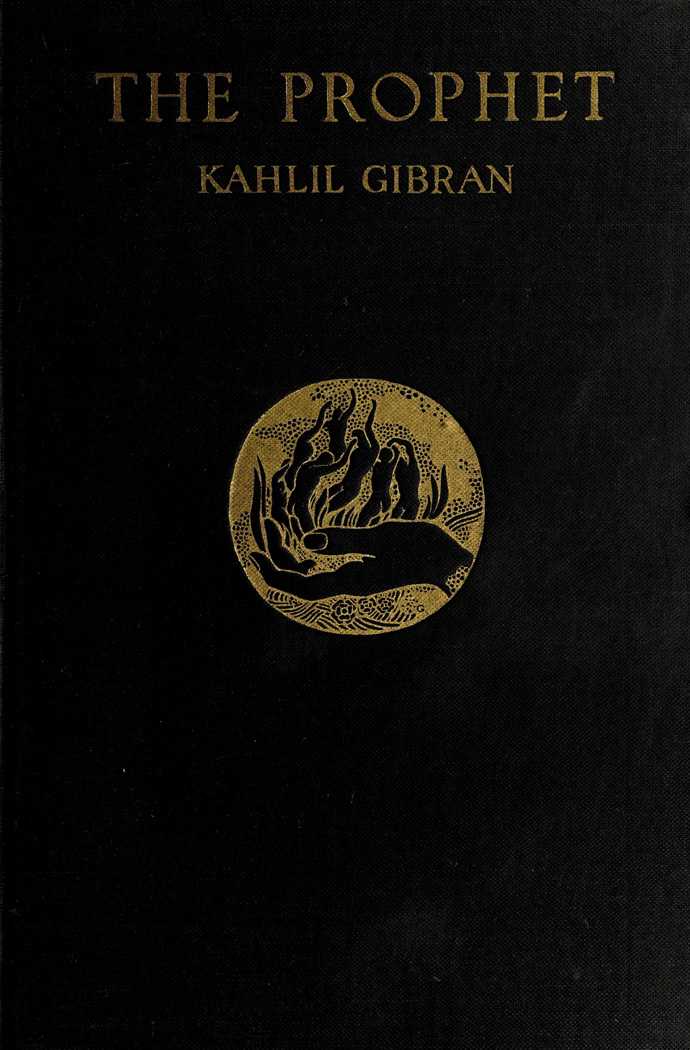


The Prophet opens as Almustafa, who has lived for twelve years in the foreign city of Orphalese, prepares to board a ship that will carry him back to his native isle. Before his departure, the townspeople gather to ask for his wisdom on the fundamental aspects of human life. Almitra, a seeress, voices their collective yearning to understand the nature of existence between birth and death.
In successive discourses, Almustafa addresses love, marriage, children, giving, eating, and working. He describes love not as a gentle comfort, but as a fierce force that threshes and kneads the soul to prepare it for divine awareness. Marriage is portrayed as a union that preserves individual space, symbolized by pillars of a temple standing apart. Children are described as living arrows sent forth by an archer who bends the bow for His own infinite purpose.
Turning to daily labor and material existence, the author reframes work as love made visible. To labor without love is to bake bitter bread, while working with devotion aligns human effort with the rhythmic march of the earth. In discussions on joy and sorrow, Almustafa argues that the two are inseparable; the very well that fills with laughter is often deepened by tears, and the cup of joy is the same vessel burned in the potter's oven.
Further discourses explore housing, clothes, buying and selling, crime and punishment, laws, and freedom. Almustafa asserts that wrongdoers are not strangers to the community, but parts of the whole human fabric, just as black and white threads are woven together in a single cloth. Freedom is revealed not as a goal to be achieved, but as a state of rising above care and desire while remaining naked and unbound before life's demands.
The final sections touch upon reason and passion, pain, self-knowledge, friendship, talking, time, good and evil, prayer, pleasure, beauty, religion, and death. Pain is presented as the breaking of the shell that encases understanding. Religion is not confined to formal worship or hours set aside for God, but encompasses every daily deed and quiet reflection. Death is described simply as the dropping of an encumbrance, akin to standing naked in the wind and melting into the sun.
The book concludes with Almustafa boarding his ship and sailing into the mist, leaving behind a community transformed by his words. He departs with the promise that his spirit will return when the conditions of human longing call him back, reminding the people that life has no graves, only cradles and stepping-stones.