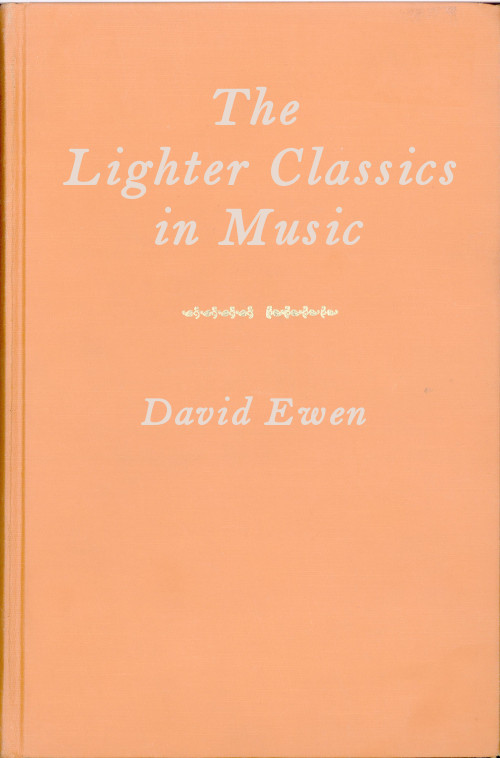





David Ewen presents a comprehensive exploration of the lighter side of classical music, profiling scores of major and minor composers from Bach to George Gershwin. The text illuminates the social origins, performance histories, and structural details of immortal orchestral suites, ballets, and operas that transcended their origins to become cultural touchstones.
Each chapter details the artistic evolution of specific masterpieces, addressing how composers integrated folk idioms, national rhythms, and theatrical demands into symphonic forms. Ewen analyzes the structural mechanics behind famous overtures, waltzes, and rhapsodies, demonstrating how technical mastery serves direct emotional expression.
The narrative traces the transition from strict classical discipline through the passionate outpourings of the Romantic movement into twentieth-century symphonic jazz. By examining works like the Rhapsody in Blue, the Peer Gynt suites, and the ballets of Delibes, the author illustrates the continuous dialogue between popular entertainment and serious musical composition.
Special attention is given to the cultural milieu surrounding each composition, detailing the premiere performances, critical receptions, and enduring legacies of these musical creations. The book serves as an invaluable catalog of melodic invention, charting the pathways through which complex art forms achieved universal accessibility without sacrificing integrity.
Ultimately, this volume provides a profound appreciation for the mechanics of musical longevity, revealing the precise harmonic and rhythmic elements that allow certain compositions to survive centuries of shifting aesthetic tastes.