
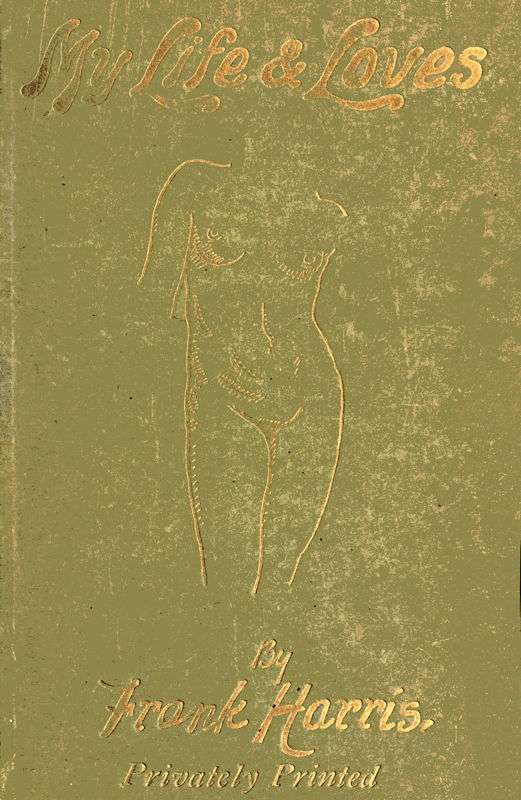





Frank Harris begins his autobiography by tracing his life from his birth in Ireland through his school days in England to his youthful adventures in America. He reflects on his early childhood memories, the loss of his mother, and his first awakening to sex at a girls' boarding school, which convinced him that sexual instincts manifest long before puberty. Throughout his narrative, Harris contrasts the warm kindliness of Irish school life with the brutal prison-like discipline and endemic cruelty of English grammar schools, where fagging often led to systemic immorality.
A major load-bearing idea of the text is Harris's rebellion against Anglo-Saxon Puritanism, which he argues has enfeebled the English language and repressed human desire. He traces the historical decay of Western civilization from the late eighteenth century onward, arguing that the rise of material wealth and the misapplication of evolutionary theories through the concept of the survival of the fittest caused human conduct to deteriorate. He forcefully rejects Pauline theology, which treats the body and its desires as sinful, and instead proposes a new synthesis: combining the pagan love of beauty with the Christian spirit of loving-kindness.
Harris illustrates these philosophical reflections with concrete episodes from his youth. He describes his departure for America at the age of sixteen, his journey across the Atlantic, his brief stint working under dangerous conditions in the iron caissons of the Brooklyn Bridge, and his subsequent life as a cowpuncher on the wild plains of Kansas and Texas. These rugged adventures taught him self-reliance, the value of physical training, and the necessity of will-power.
Throughout the work, Harris dwells on his numerous educational experiences, his reading of standard authors like Walter Scott and Macaulay, and his awakening to natural beauty. He emphasizes the absolute importance of self-knowledge and the duty of every individual to develop their special faculties to the uttermost. The text serves as his declaration of faith in the beauty of both the body and the soul, advocating for total honesty and freedom in discussing passion and desire.
The volume ends with his return to civilization and his encounter with new intellectual influences, leaving the reader with a sense of a life shaped by relentless curiosity, combativeness, and an uncompromising quest for truth.


