



Max Nordau begins by defining the fin-de-siècle mood as a state of profound exhaustion and despair, drawing parallels between contemporary societal decay and historical periods of decline. He examines the physical and mental stigmata of degeneration, asserting that modern authors and artists manifest the same neuropathic characteristics as criminals and lunatics. The argument develops through detailed critiques of mysticism, ego-mania, and realism, identifying figures like the Pre-Raphaelites, Wagner, Ibsen, Nietzsche, and Zola as prime examples of pathological art. Nordau argues that these movements rely on obscurity, emotionalism, and irrationality to appeal to an equally exhausted and impressionable public suffering from hysteria and neurasthenia. He traces the root cause of this widespread intellectual and physical decay to the rapid industrialization of modern life, the overcrowding of great large towns, and the relentless strain of technological progress on the human nervous system. The work concludes with a stern prognosis, warning that these cultural manifestations point backward toward intellectual ruin rather than forward to a healthy new era.
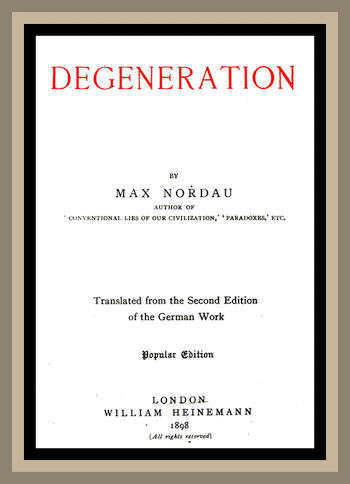
Audiobook Degeneration
Nordau argues that modern artistic and literary movements are direct symptoms of biological and nervous exhaustion. Through clinical analysis, he links contemporary trends to degenerative mental conditions rather than genuine creative progress.
Listen to the audiobook
Similar audiobooks
Summary of “Degeneration”
What the book is about
- comparative literature
- degeneration
- europe -- intellectual life
You may also like


 4:05:06

 6:56:17