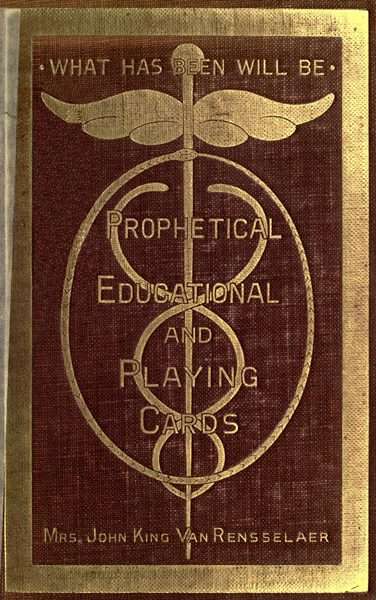



The author presents a thorough historical investigation into the origins of playing cards, challenging the common belief that they were invented simply for medieval gambling. Instead, the book argues that standard playing cards and Italian tarots are the surviving leaves of the ancient 'Book of Thoth,' serving originally as a sacred divinatory oracle.
The central problem posed is the unexamined dismissal of primitive games as mere pastimes, when they actually retain the ritualistic and divinatory practices of antiquity. The argument develops by examining the deep structural connections between the suits of the tarot pack and the four primary attributes of the classical god Mercury: swords, money, staves, and cups. These symbols mirror the four major castes of ancient societies and the emblematic regalia of Egyptian and Babylonian deities.
The main storylines and ideas focus on tracing the specific attributes of Mercury, Thoth, and Nebo through archaeological remains, ancient texts, and surviving European traditions. The author covers the transition of divinatory arrows and rods into the pip cards of modern decks, the historical significance of the twenty-two atouts, and the ways different nations adopted and modified these symbols for regional games. Key historical figures and artists, such as Court de Gebelin and various Renaissance Italian miniaturists, are examined for their contributions to preserving or obfuscating the original meanings of the cards.
Ultimately, the work gently hints at the restoration of a lost intellectual heritage, demonstrating that the casual shuffle of a deck of cards echoes ancient rites used to consult the tablet of fate, thereby bridging the vast gap between modern leisure and ancient sacred mysteries.