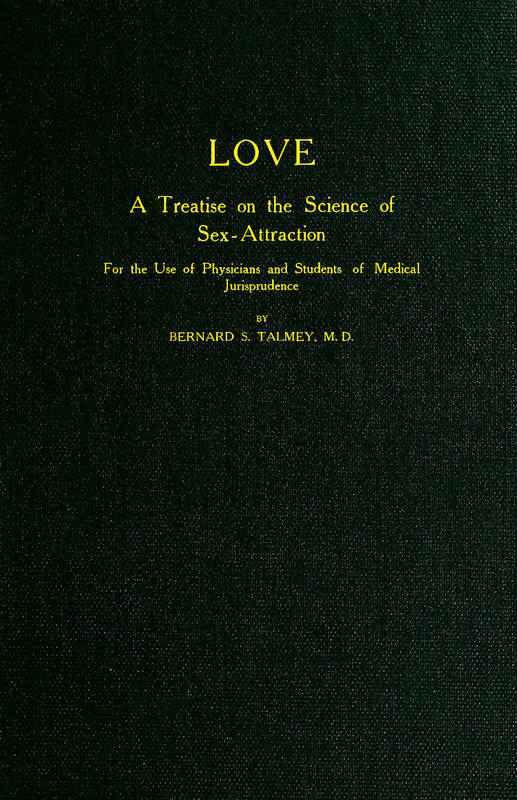




The work opens with an introduction comparing the fundamental appetites of hunger and love, tracing ancient phallicism, yonism, and the historical societal suppression of sexuality. It details the organic evolution of sex, starting from unicellular organisms and progressing through embryology, the development of the genital system, and the primary and secondary characteristics of both sexes.
The physiological section breaks down cell division, maturation, spermatogenesis, and ovulation. It details the specific mechanical and nervous functions of male and female generative organs during coition, the nature of the libido, and the physiological curves of the sexual spasm and orgasm.
The psychological analysis examines the sexual instinct, distinguishing between the impulse of contrectation, or the desire for contact, and detumescence, or the need for discharge. It explores the transition from sensual love, driven by egoistic appetite, to sentimental love, characterized by conscious altruism, cerebral maturity, and emotional pairing.
The pathology portion addresses anomalies including paradoxia, various forms of nervous impotence resulting from excesses or mental erethism, hyperaesthesia, and paraesthesia. The final sections cover sexual hygiene through childhood, eugenics, adult engagement rules, and the broader standards of sexual morality and chastity.