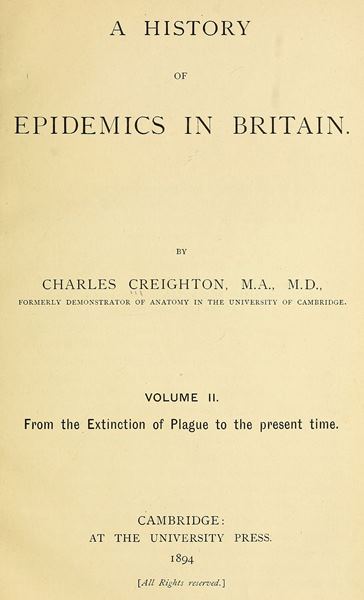



This volume is the continuation and completion of the historical study of epidemics in Britain, covering the period from the extinction of the plague to the late nineteenth century. The author examines the nosological complexities of continued fevers, such as typhus and relapsing fever, showing how their prevalence serves as an accurate index of the working classes' well-being, town unwholesomeness, prison conditions, and periods of economic distress. Unlike the uniform and dramatic impact of the plague, the post-1666 era saw the rise of numerous fevers, anginas, and infantile scourges whose identification challenged contemporary observers. The work provides a continuous view of smallpox, tracing its shifting incidence across classes and age-periods, alongside the history of inoculation and vaccination.
It also documents the shifting prominence of measles and whooping-cough as public health improved, the emergence of scarlatina and diphtheria, the gradual decrease of dysentery, and the devastating impact of Asiatic cholera. Special attention is given to the unique and obdurate problem of influenza and epidemic agues. Throughout the narrative, epidemiological data is closely interwoven with social and economic history, illuminating the living conditions of the population and the sanitary measures that eventually enabled public health authorities to control the spread of disease.