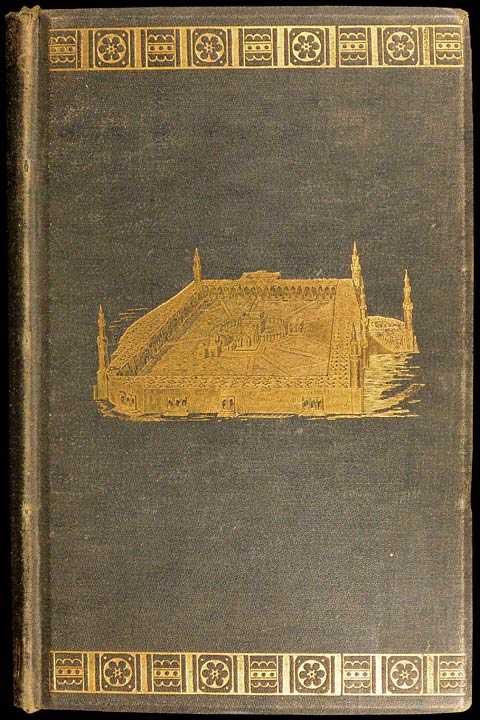



The book functions as a comprehensive cyclopædia designed to provide English-speaking readers with a systematic exposition of the Muhammadan religion. It covers the doctrines, rites, ceremonies, and customs, alongside technical and theological terms, of the faith. The author draws primarily upon Sunni orthodoxy while carefully noting the chief theological and jurisprudential points on which the Shiah and Wahhabi schools differ. This approach ensures that readers understand both mainstream practices and early traditional interpretations of Islamic theology.
Rather than operating as a biographical dictionary of great persons, the volume includes short notices of early historical figures only where their actions connect directly with religious dogmas, ceremonies, or schools of jurisprudence. Examples of such inclusions range from the martyrdom of Husain to the judicial foundations established by Abu Hanifah and the political power consolidated by the Khalifah Umar. The work deliberately avoids a controversial missionary tone, focusing instead on objective exposition and scholarly accuracy.
The research benefits from the author's long residence among Muslim populations, allowing consultation of original Arabic and Persian texts with the assistance of native scholars and orientalists. Special attention is paid to making the information accessible to readers unacquainted with Oriental languages. Consequently, entries are arranged predominantly under English terms rather than their Arabic equivalents, making subjects such as prayer, marriage, and the attributes of the Divine Being immediately accessible to general students.
The volume addresses a wide audience, ranging from government officials administering justice to Muslim populations and Christian missionaries engaged in theological discussions, to oriental travelers and students of comparative religion. By gathering these leading principles of thought, the work illuminates the theological framework that guides millions across the globe. Through careful transliteration and thorough cross-referencing, the dictionary bridges the gap between Eastern religious life and Western scholarship.